
News
Strong Solar Flare Disrupts Radio Communication Across Australia

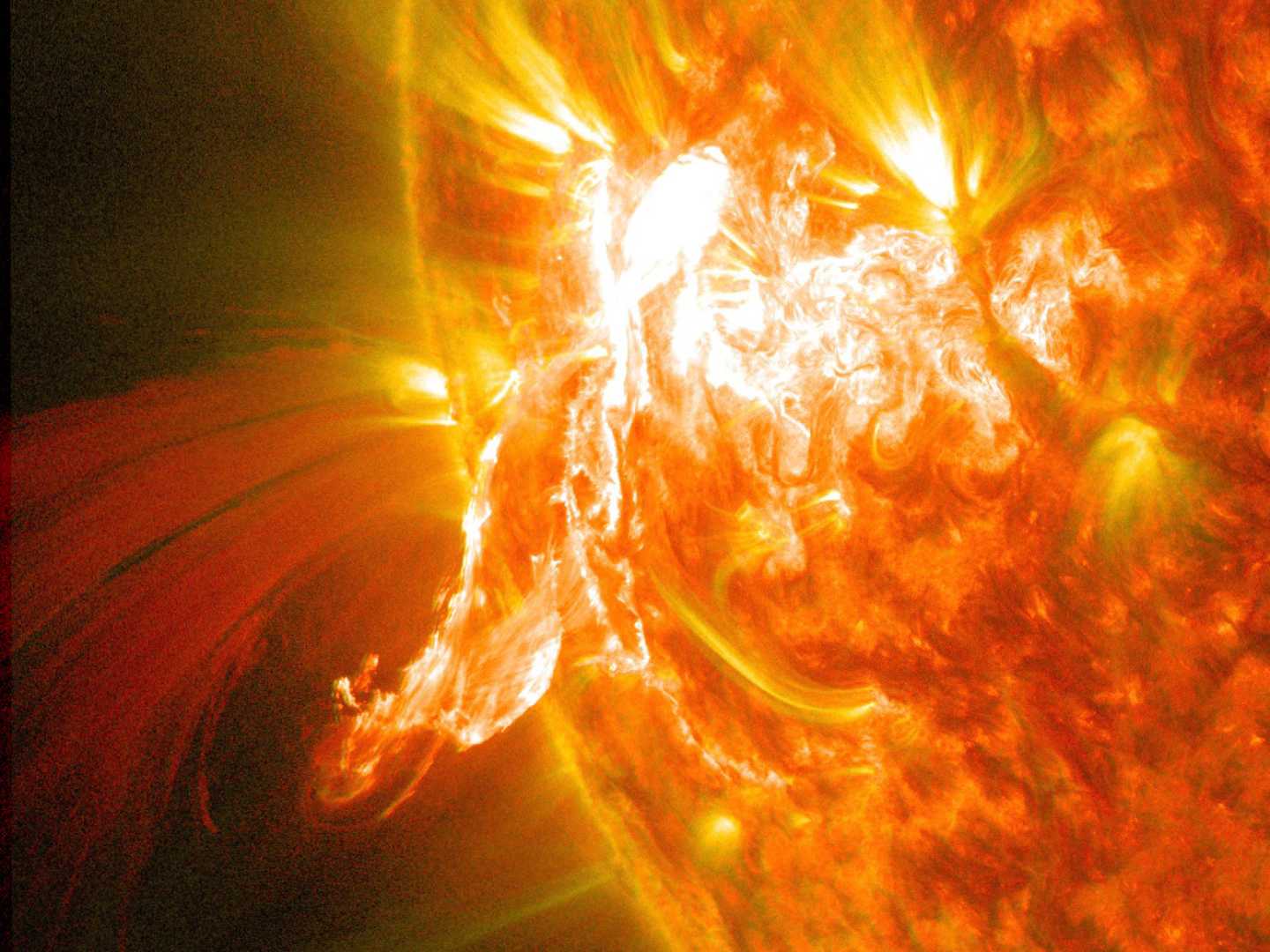
GREENBELT, Md. — A powerful solar flare, classified as X1.9, erupted from the Sun on Nov. 30, 2025, peaking at 9:49 p.m. ET. The event caused significant disruptions in radio communications across Australia and parts of Southeast Asia.
The flare originated from a newly emerging sunspot region known as AR429, which is now rotating into view over the Sun’s northeastern limb. According to NASA‘s Solar Dynamics Observatory, the solar eruption emits a bright flash, with images highlighting the extreme ultraviolet light produced during the event.
This X1.9-class solar flare is among the most intense types of solar flares. Such flares are known for their potential to disrupt radio communications, impact navigation systems, and pose risks to satellites and astronauts in space.
The solar eruption triggered strong R3 radio blackouts on the sunlit side of the Earth at the time of the flare, leading to weak degradation of high-frequency radio communication and occasional loss of contact for operators.
NASA and NOAA’s Space Weather Prediction Center are closely monitoring the situation, particularly as another large sunspot region, AR4294, follows AR429. NOAA expects continued solar activity and warns of a 70% chance of additional solar flares between Dec. 1 and Dec. 5, 2025.
While no Earth-directed coronal mass ejections (CMEs) have been reported from this event, the growing activity from sunspots could lead to further disruptions. Geomagnetic conditions are expected to remain mostly quiet until Dec. 3, when a coronal hole stream may induce minor geomagnetic storms.
The public is advised to stay updated on the latest space weather conditions through NOAA and NASA’s official sources.


