
News
Cold Winter Looms for 2025/2026 Across the U.S. and Europe

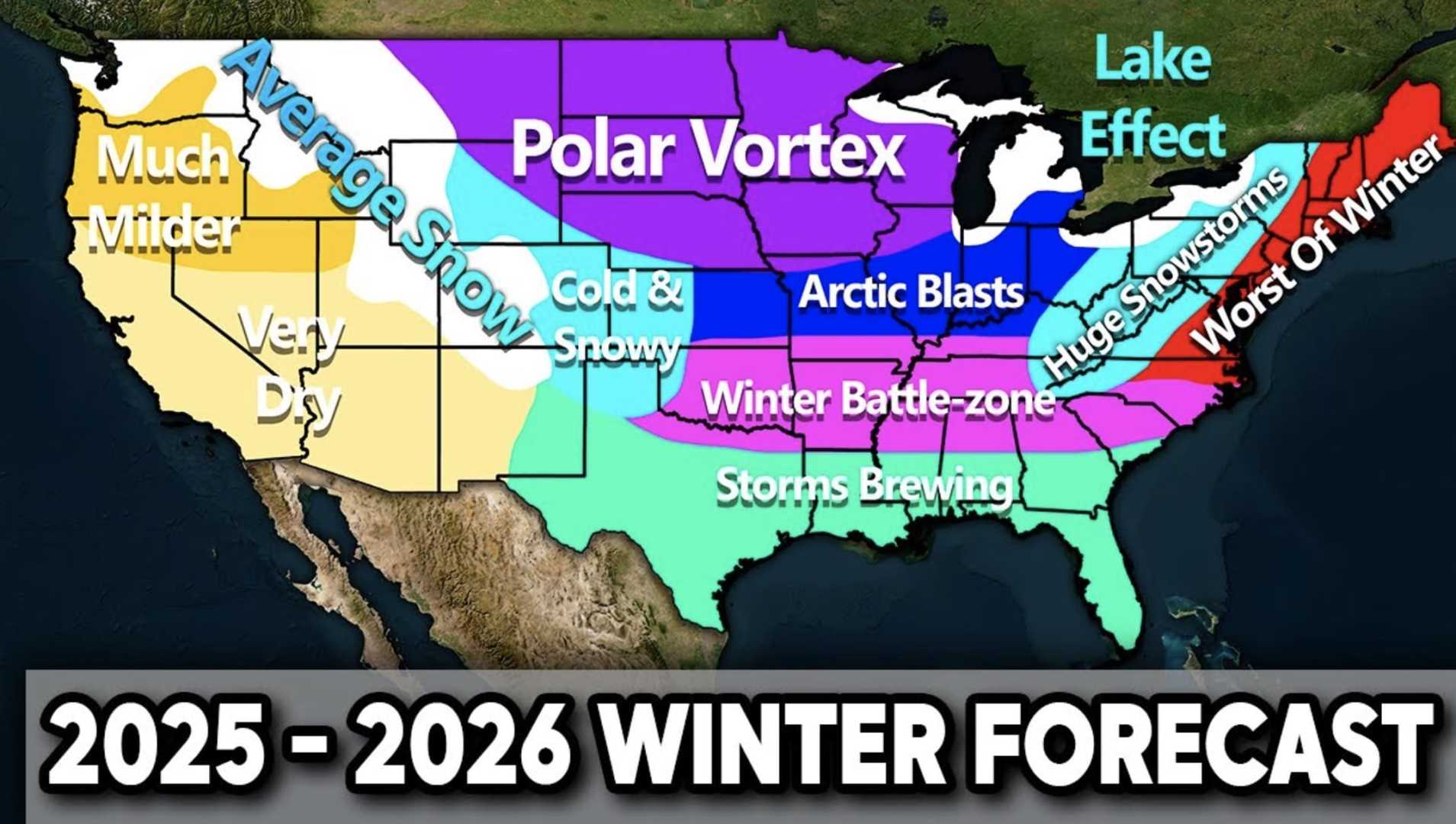
CHELSEA, NY — A forecast indicating a colder winter for the 2025/2026 season has been released, suggesting significant chill across portions of the United States, Canada, and parts of Europe. This forecast relies on an analog method, wherein past winters exhibiting similar conditions are examined to predict future weather patterns.
Several oceanic and atmospheric factors are aligning to hint at this forecast. One of the main influencers, the El Niño Southern Oscillation (ENSO), is showing signs of shifting towards a cold phase, known as La Niña, which typically directs colder polar air into lower latitudes. Data from the NOAA indicates a wave of cool anomalies developing in the Pacific, foretelling that La Niña might persist into winter.
Research indicates that La Niña winters usually bring a strong blocking high-pressure system in the North Pacific, combined with lower pressure over Canada. This pattern tends to redirect the polar jet stream southward, facilitating colder weather in northern U.S. states. Historical data reveals strong signals of subzero temperatures extending from western and central Canada into the northern U.S.
Furthermore, the Quasi-Biennial Oscillation (QBO), which affects stratospheric wind patterns, is currently in a negative phase. This shift has previously been linked to a weakened polar vortex, a phenomenon which can enhance cold air outbreaks during winter, increasing the potential for significant snowfall when moisture is available.
In addition to these atmospheric conditions, an extensive October snow cover in Siberia is also under observation. Research suggests that enhanced snow cover can destabilize the polar vortex later in the winter season, leading to increased chances of cold intrusions across North America.
Overall, multiple signals point toward a colder winter onset. With the polar vortex forecasted to be weaker than normal for early winter, there are increased chances for a frigid winter, though not every season with similar predictors guarantees extreme cold.


