ESA’s JUICE Probe Captures Image of Active Interstellar Comet 3I/ATLAS

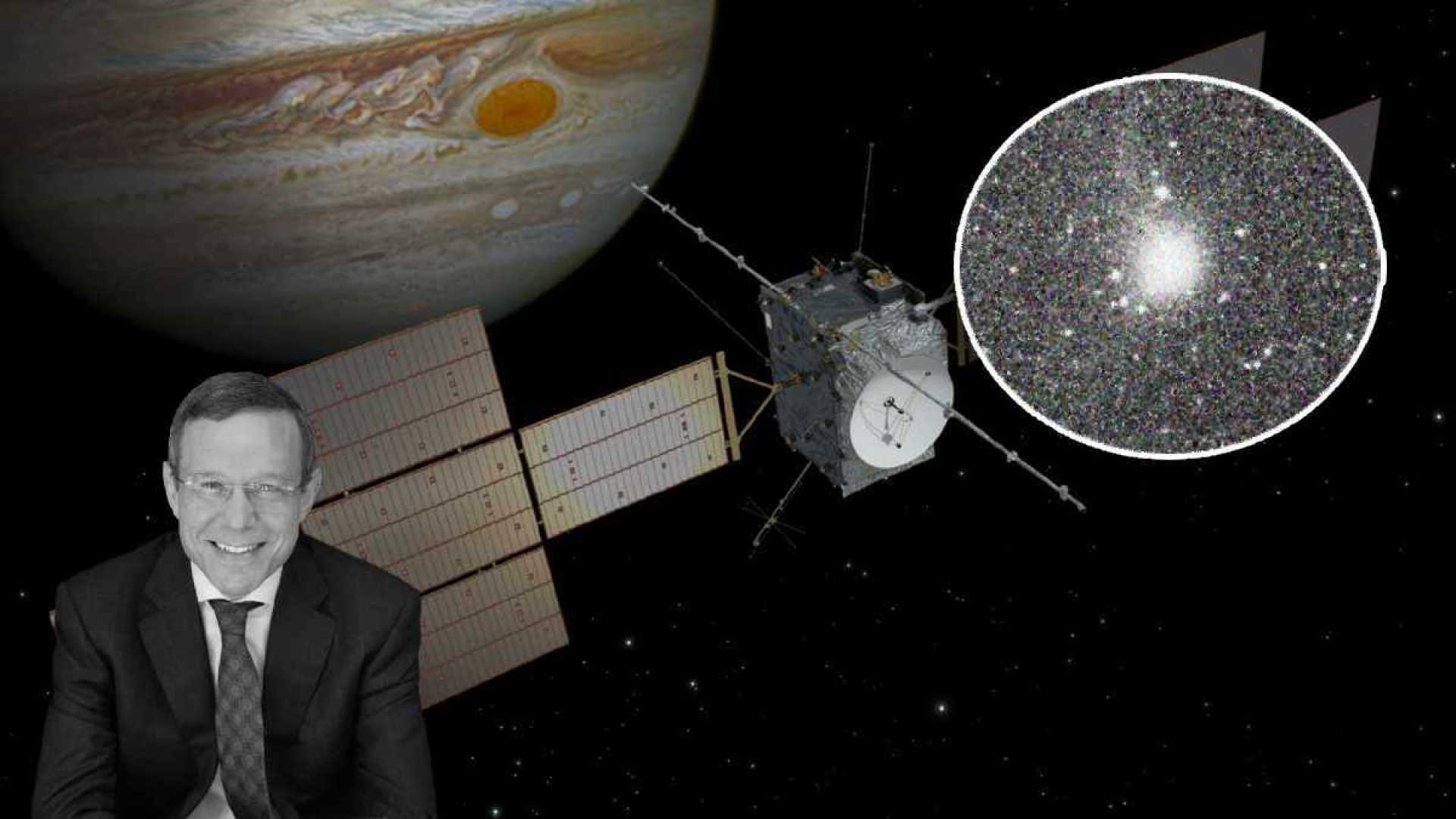
PARIS, France — The European Space Agency (ESA) has released a stunning preliminary image captured by its Jupiter Icy Moons Explorer (JUICE) probe, showcasing the active interstellar comet 3I/ATLAS. This image, taken on November 2, 2025, comes just after the comet’s perihelion, or closest approach to the Sun, and reveals significant activity surrounding the object.
3I/ATLAS, identified as the third confirmed interstellar object in the Solar System, was first detected on July 1, 2025, by an ATLAS telescope in Chile. The JUICE probe, which launched in April 2023 and is en route to Jupiter, is scheduled to arrive in 2031.
During its observations between November 2 and 25, 2025, JUICE used five scientific instruments at a distance of approximately 66 million kilometers from the comet. The released image, which represents only a quarter of the data, shows the comet’s nucleus surrounded by a visible coma—a cloud of gas and dust formed by the sublimation of ices due to solar heat.
The coma is estimated to be around 100,000 kilometers in diameter. The observation was particularly significant as the NavCam, designed primarily for navigation around Jupiter’s moons, successfully captured the comet’s characteristics. Researchers noted clear indications of two distinct tails: a plasma tail of charged particles extending away from the Sun and a dust tail trailing behind the comet.
As the JUICE team awaits additional data, they expressed excitement at the preliminary findings. They remarked, “Though the data from the science instruments won’t arrive until February 2026, our JUICE team couldn’t wait that long.” The complete sets of scientific observations are delayed due to the probe’s main antenna being utilized as a heat shield.
3I/ATLAS is expected to make its closest approach to Earth on December 20, 2025, and will pass Jupiter in March 2026, at a distance of approximately 50 million kilometers. This opportunity allows scientists to study an interstellar object moving through our Solar System, potentially providing insights into the formation and composition of distant planets.
The observations made during JUICE’s flyby are anticipated to help refine existing models related to the ejection of materials in exoplanet systems. Observations from the Perseverance rover on Mars will also contribute to a more comprehensive understanding of 3I/ATLAS.
As the JUICE probe continues its journey towards its primary mission of exploring Jupiter’s icy moons, its unexpected encounter with 3I/ATLAS highlights the importance of adaptability in space exploration efforts.