Unexpected Glow from 3I/ATLAS Raises Questions of Alien Technology

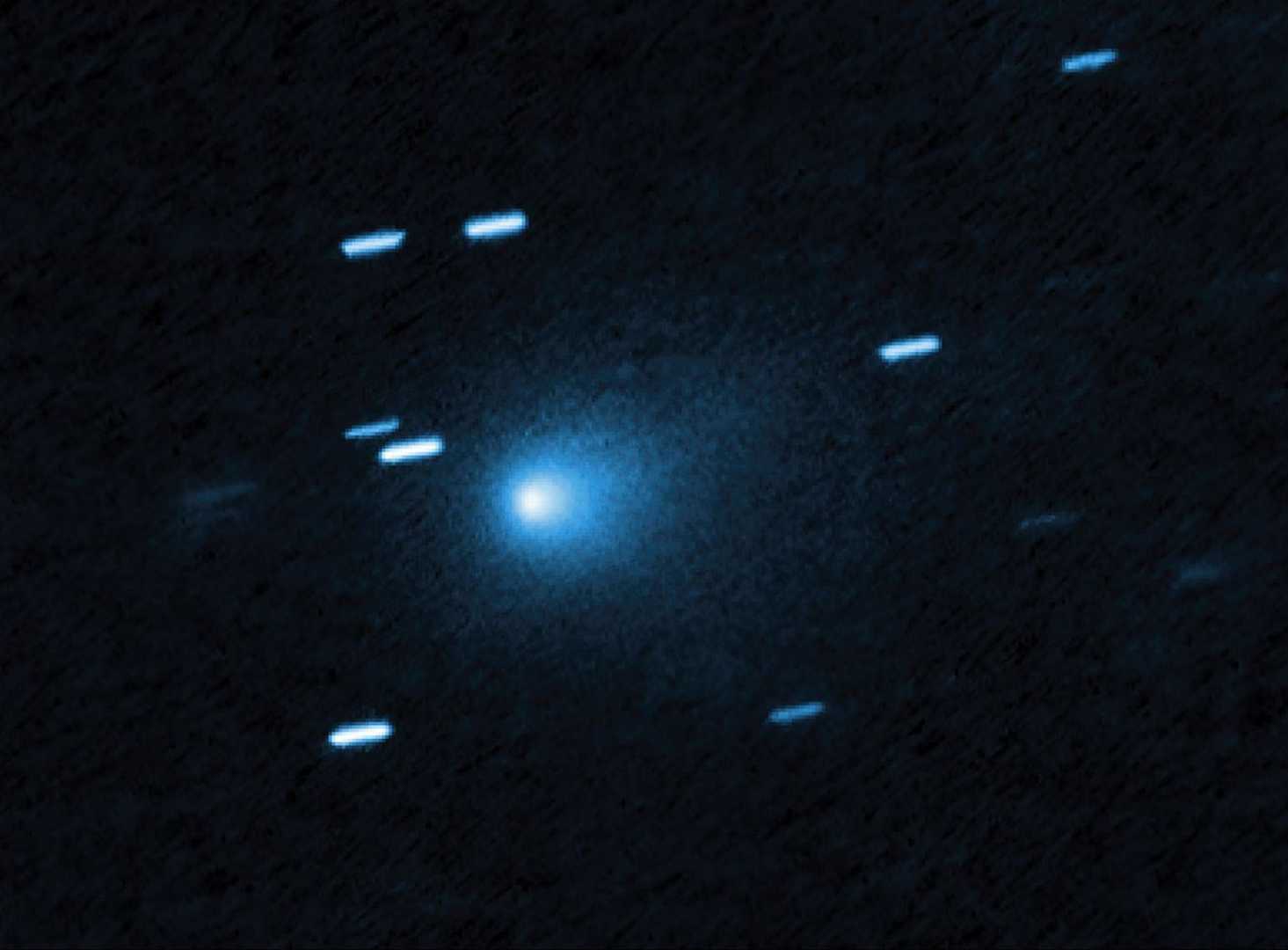
CAMBRIDGE, Mass. — Astronomers are intrigued by an interstellar object named 3I/ATLAS, recently captured in images from the Hubble Space Telescope. This unique object appears to be generating its own light as it approaches the Sun, suggesting it may not be a typical comet.
Harvard astrophysicist Avi Loeb observed that the light from 3I/ATLAS emanates from a concentrated glow on the side facing the Sun. Unlike typical comets that reflect sunlight, this glow’s brightness decreases sharply with distance, leading researchers to reconsider its nature.
This revelation has sparked speculation that 3I/ATLAS could possibly be a spacecraft powered by nuclear energy. “If 3I/ATLAS produces its own light, it could be much smaller than we thought, potentially around 300 feet long,” Loeb said, contrasting it with the initial estimates of 12 miles in diameter.
Loeb and his colleague Eric Keto propose that if the object generates its own light, it means the nucleus of 3I/ATLAS plays a significant role in the observed brightness. This finding challenges earlier theories that classified it solely as a comet, which typically displays a coma of gas and dust. However, 3I/ATLAS shows no such feature.
The object is currently on a rare trajectory that will bring it close to Mars on October 3, 2025. Loeb has encouraged NASA’s HiRISE team to use their camera during this flyby to capture more data about 3I/ATLAS, which could shed light on whether it is simply a natural object or something more complex.
As 3I/ATLAS approaches Earth, astronomers are eager for better images that could help clarify its size and composition. With limited natural explanations fitting the data gathered thus far, many researchers now lean towards the possibility of artificial origin.