
News
Ritual Killings Haunt Sierra Leone as Families Seek Justice

MAKENI, Sierra Leone — Families in Sierra Leone are grappling with the aftermath of ritual killings linked to black magic practices. The heartbreaking story of an 11-year-old boy named Papayo, who was murdered four years ago, highlights the ongoing trauma and lack of justice experienced by many. His mother, Sallay Kalokoh, expressed her anguish, stating, “Today I’m in pain. They killed my child and now there is just silence.” Papayo’s body was discovered with organs and limbs removed after he went missing for two weeks.
Kalokoh’s son left to sell fish at the market but never returned home. His family eventually found him in a well, a victim of a gruesome act believed to be part of juju rituals. Despite the horrific nature of the murder, local authorities have not labeled it as a ritual killing, and unresolved cases like this plague many communities.
Belief in witchcraft is prevalent in Sierra Leone, complicating police investigations. Authorities are limited in resources, with only one pathologist for a population of 8.9 million. Many police officers harbor superstitions that deter them from pursuing such sensitive cases, resulting in an alarming rate of unsolved murders.
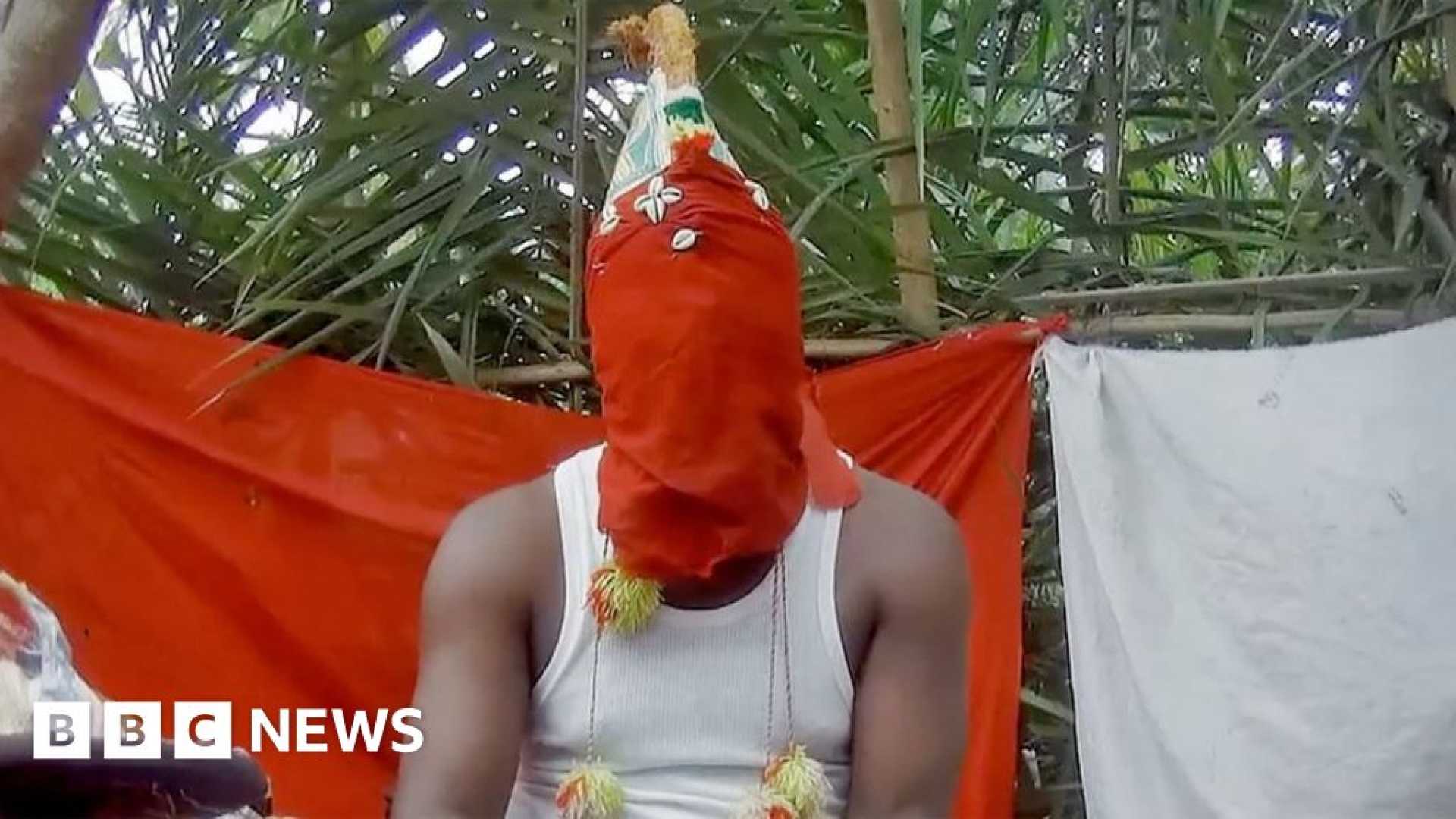
The BBC Africa Eye investigation unveiled how witch doctors known as juju practitioners operate in secret. Undercover reporters encountered practitioners who claimed to have connections to high-profile clients across West Africa. One practitioner, Kanu, described horrific practices at his shrine, displaying a human skull and outlining his role in ritual sacrifices.
Kanu proclaimed, “This is where we hang human parts. We slaughter here, and the blood goes down there… Even big chiefs, when they want power, come here.” When asked about pricing for human body parts, he quoted 70 million leones (approximately $3,000) for a woman’s limbs.
Sheku Tarawallie, president of Sierra Leone’s Council of Traditional Healers, condemned the actions of such practitioners, stating, “We are healers, we are not killers.” He is working to improve the image of traditional healers, who play a vital role in the community.
As the investigation continued, undercover reporters found a second practitioner, Idara, in Freetown, who worked with a network of herbalists involved in the illicit trade of body parts. He recounted chilling operations where they captured victims and supplied specific body parts upon request.
Police have arrested Idara and two accomplices on charges of practicing sorcery and possession of traditional weapons. However, the legal system’s slow pace leaves families like Kalokoh’s and the family of Fatmata Conteh, another recent victim, feeling abandoned as justice remains elusive.
Sallay Kalokoh’s pain echoes across communities in Sierra Leone, where unresolved murder cases amplify fear. As families continue to seek justice for their loved ones, many remain haunted by the threat of ritual killings.


