
News
NASA Reveals Stunning Images of Interstellar Comet 3I/ATLAS

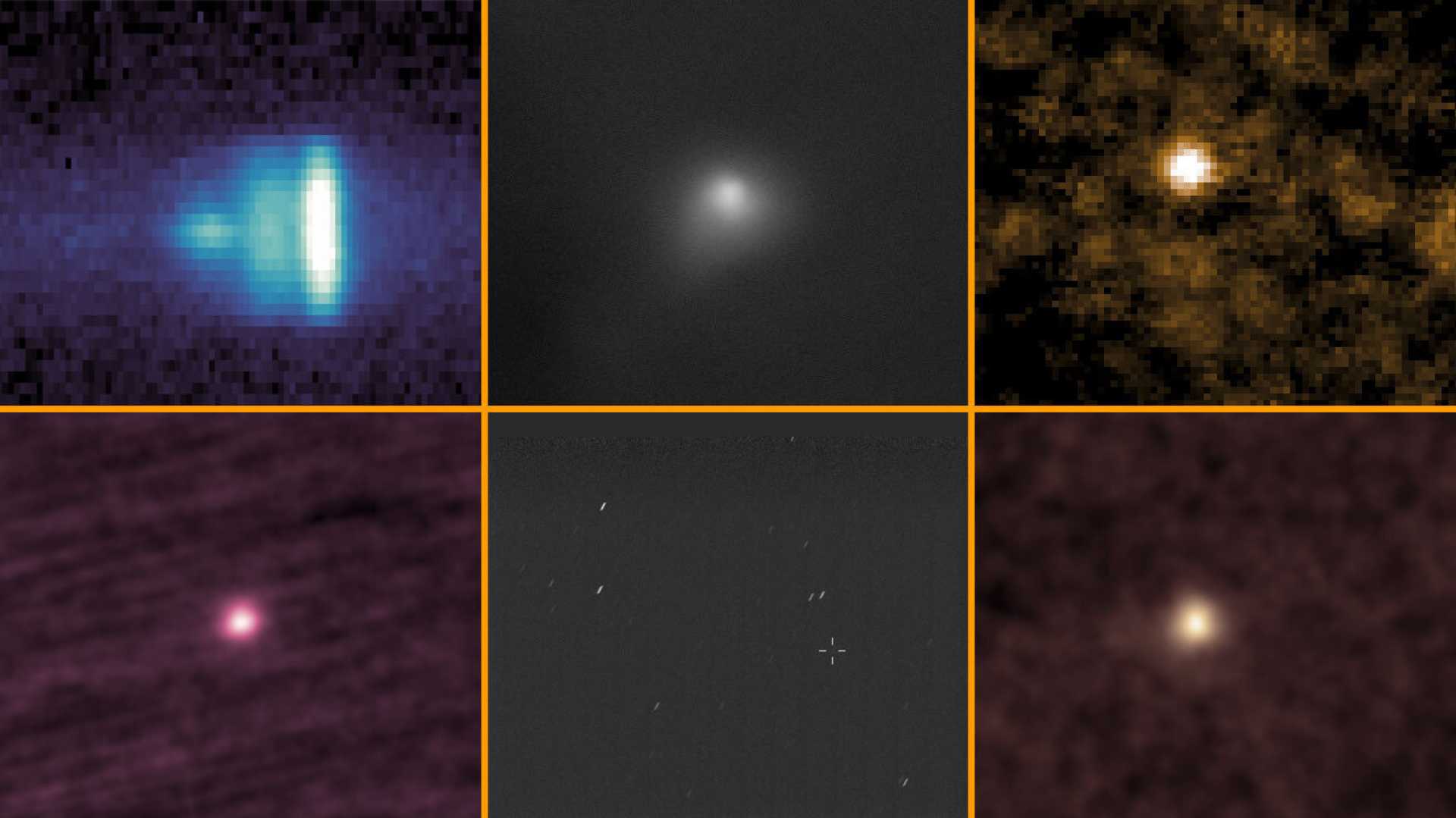
Washington, D.C. — NASA is currently engaged in an unprecedented observation campaign of the solar system, focusing on the comet 3I/ATLAS, the third known interstellar object to journey through our corner of space. The agency’s twelve spacecraft have documented images and data of the comet since its discovery on July 1, 2025, with more equipment expected to capture further observations as the comet travels onward.
Comet 3I/ATLAS recently passed Mars, coming within approximately 19 million miles of the planet. Here, NASA’s Mars Reconnaissance Orbiter (MRO) obtained close images while the MAVEN orbiter collected ultraviolet data to analyze the comet’s composition. Additionally, the Perseverance rover captured a dim visual of the comet from its surface.
The MRO utilized its High Resolution Imaging Science Experiment (HiRISE) camera on October 2 to capture an image of 3I/ATLAS, which at the time was about 19 million miles away. Meanwhile, MAVEN’s imaging spectrograph provided significant insights into the comet’s hydrogen emissions.
NASA’s heliophysics missions, like STEREO and SOHO, also monitored the comet as it passed behind the Sun, offering data that would otherwise be inaccessible. These observations mark the first time that NASA has intentionally tracked an interstellar object.
In addition, the Psyche and Lucy spacecraft took observations as they journey through the solar system, further refining the comet’s trajectory. Images from Psyche on September 8 and 9 showed the comet from 33 million miles away, while Lucy observed 3I/ATLAS from a distance of 240 million miles.
The comet is expected to make its closest approach to Earth on December 19 at a distance of about 170 million miles, nearly twice the distance from Earth to the Sun. As 3I/ATLAS travels, scientists from NASA will continue to analyze the data and imagery for insights about its origins, which may date back to a star system older than our own.
Nicky Fox, NASA’s associate administrator for the Science Mission Directorate, emphasized the scientific significance of the opportunity to study this comet, noting that its materials could shed light on the differences between the compositions of our solar system and other systems.


