
News
NASA’s Europa Clipper Observes Interstellar Comet 3I/ATLAS

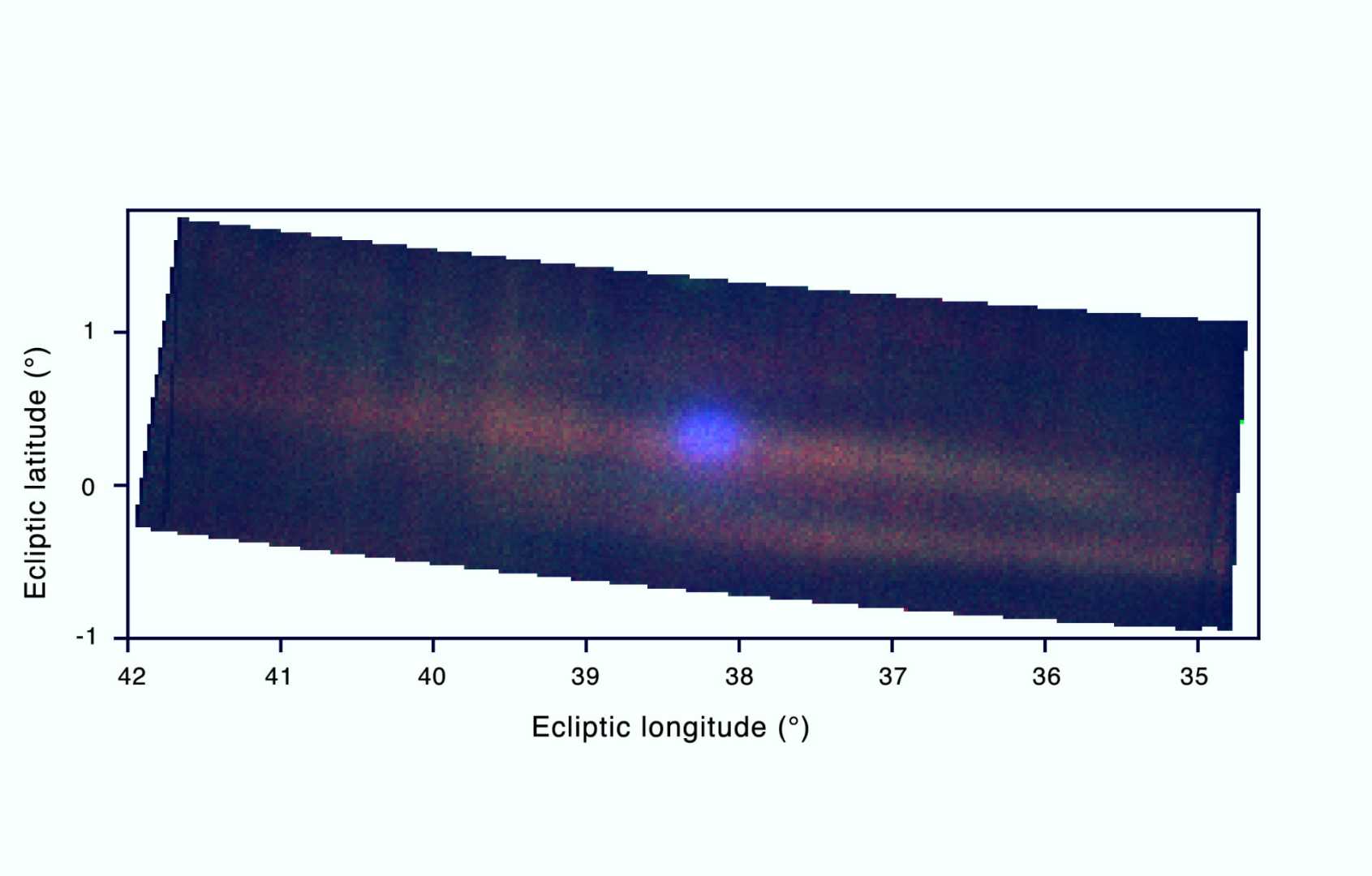
PASADENA, Calif. — NASA‘s Europa Clipper has taken a rare opportunity to observe interstellar object 3I/ATLAS as it passed near the Sun. The observation occurred as 3I/ATLAS was becoming less visible from Earth but remained visible to interplanetary probes.
Anticipating this unique chance, the operational team at Europa Clipper utilized the spacecraft’s instruments during its journey toward Jupiter. The probe turned its Ultraviolet Spectrograph (UVS) toward the comet, capturing vital spectroscopic data.
3I/ATLAS, which was discovered on July 1, 2025, by the NASA-funded ATLAS survey, has generated significant interest in the scientific community. The comet approaches perihelion around this time, revealing details about its composition and behavior as it interacts with solar radiation.
Fraser, a leading researcher on the project, explained that Europa Clipper was able to detect two distinct tails behind the comet. One tail consists of dust particles released from the comet’s nucleus, while the other is composed of particles altered by solar rays. This data could provide clues about the comet’s makeup and the chemical processes occurring as it passes through the solar system.
As the spacecraft continues its mission, it is also curving beyond the orbit of Mars, approaching the Red Planet on its journey through the solar system. Instruments mounted on Mars have already begun collecting data about 3I/ATLAS.
In addition to Europa Clipper, the European Space Agency’s Jupiter Icy Moon Explorer (JUICE) also observed the comet during this time. JUICE, which was positioned to see from a different angle, used its own version of the UVS instrument to enhance the data received.
In an interesting twist, both probes serendipitously found themselves in ideal positions to study a comet that many scientists believe has never encountered the Sun before.
“This is a once-in-a-lifetime observational opportunity,” Fraser said. “We are eager to learn about what 3I/ATLAS can teach us about the galaxy.”
The results from these observations are expected to be published in the upcoming months, although preliminary results have sparked excitement within the astronomy community. As scientists make sense of the data, they will also address theories surrounding the comet’s origins and its implications for understanding interstellar bodies.
As Europa Clipper nears the end of this observational phase, it will soon enter the comet’s dust tail, and researchers look forward to more surprising findings.


