
News
New Evidence Points to Natural Origin of Interstellar Comet 3I/ATLAS

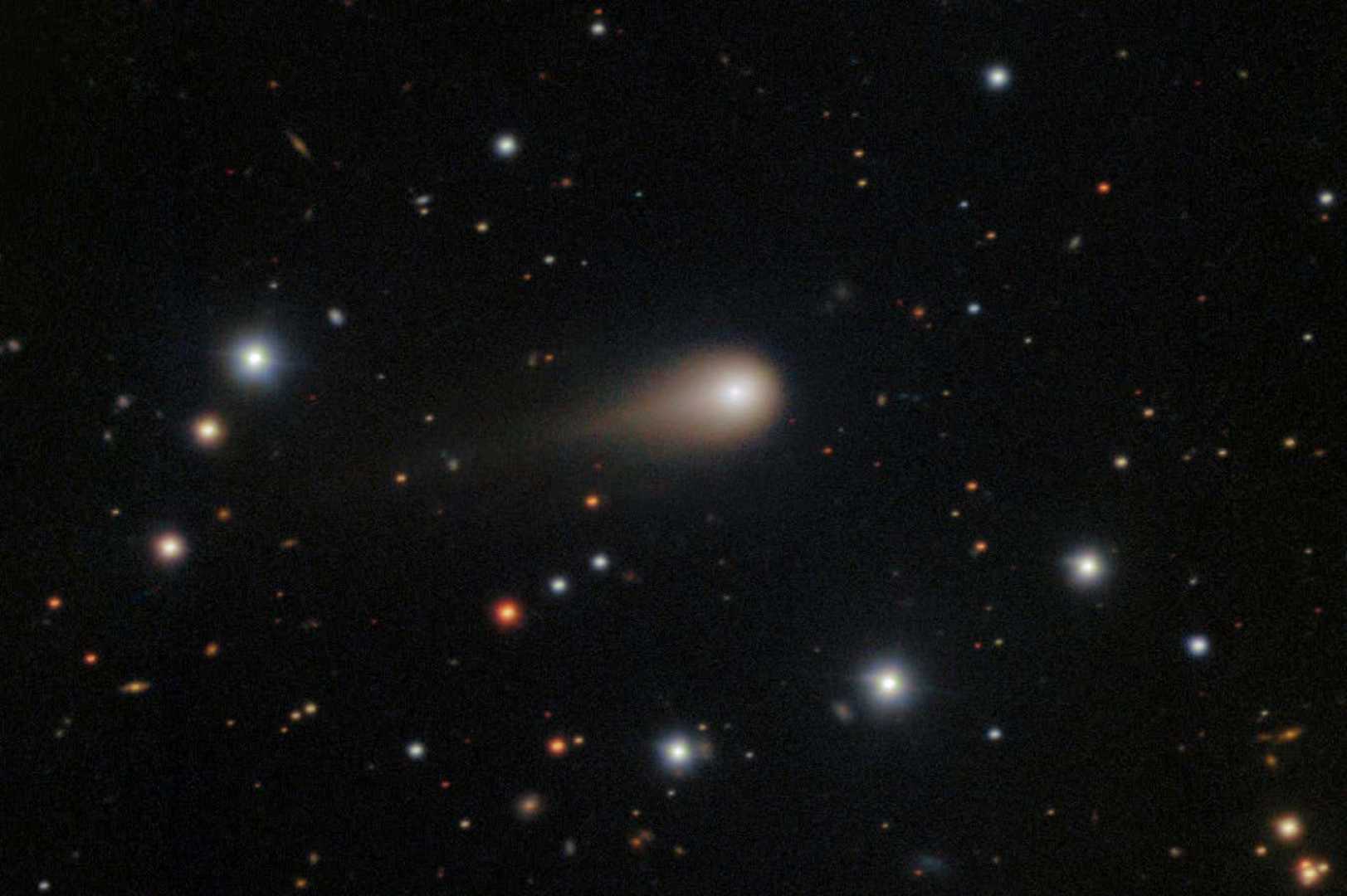
Observatory in South Africa recently confirmed new findings regarding the interstellar object 3I/ATLAS. The discovery raised questions about its origin, including whether it is a natural comet or evidence of alien technology.
On October 24, the MeerKAT radio telescope detected radio absorption signals that indicate the presence of hydroxyl radicals (OH molecules) from 3I/ATLAS, suggesting cometary activity. Researchers identified two absorption lines at radio frequencies of 1.665 GHz and 1.667 GHz.
Dr. Avi Loeb, an astrophysicist at Harvard, highlighted that this detection came after previous attempts on September 20 and 28 were unsuccessful. He noted, “I encouraged radio observatories to observe 3I/ATLAS due to its direction coinciding with the Wow! signal detected in 1977.”
The recent findings are significant as they indicate typical comet behavior when 3I/ATLAS was near the sun, causing it to sublimate ice and change its trajectory. Loeb remarked, “We should monitor the OH production to further understand its nature.”
On November 8, new images captured a complex structure surrounding 3I/ATLAS that could be interpreted as jets from thrusters or ice pockets, adding to the debate about whether it is a natural object.
With its closest pass to Earth scheduled for December 19, scientists remain vigilant. Dr. Loeb pointed out that there will be opportunities for further testing during 2026 when 3I/ATLAS approaches Jupiter.
The detection of OH molecules is a milestone, but researchers agree that ongoing studies are crucial to distinguish between a natural comet and any potential technological origin.


