
Politics
U.S. Diplomats Push Against Cuba’s U.N. Resolution Amid Ukraine Conflict

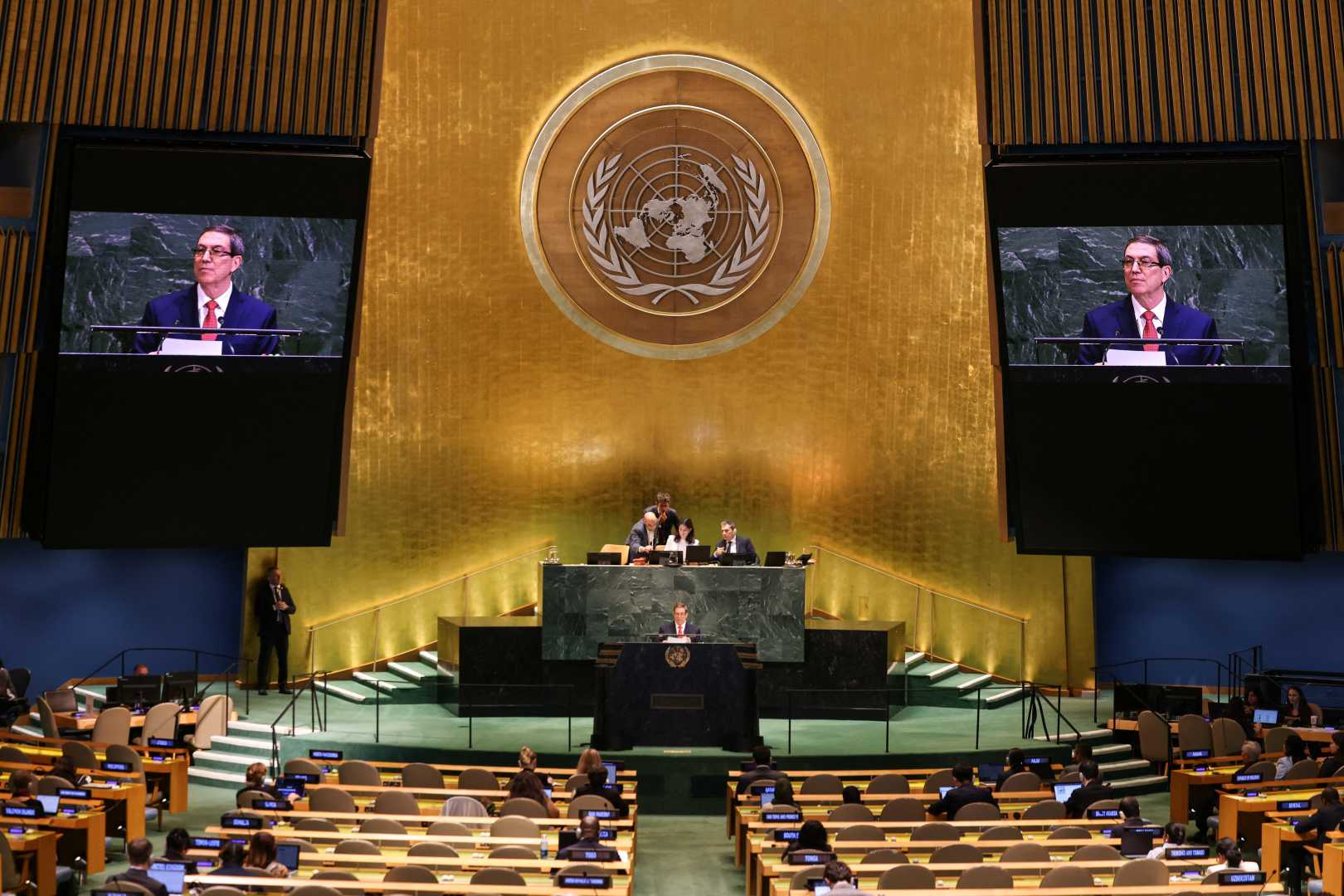
WASHINGTON, Oct. 5 (Reuters) – The Trump administration is mobilizing U.S. diplomats to lobby against a U.N. resolution asking the U.S. to lift its long-standing embargo on Cuba. The effort includes highlighting Cuba’s support for Russia‘s war in Ukraine, according to an internal State Department cable.
U.S. diplomats are instructed to inform other countries that Cuba is aiding Russia’s invasion by sending up to 5,000 troops to fight alongside Moscow’s forces. The unclassified cable, dated October 2, directed diplomats to urge governments to oppose the resolution, which has consistently passed in the U.N. General Assembly since 1992.
The Permanent Mission of Cuba to the United Nations did not comment immediately when contacted. In previous years, the resolution passed with 187 countries voting in favor, with the U.S. and Israel as the sole opposers, while Moldova abstained.
Since taking office in January, Trump has intensified sanctions against Cuba, including placing it back on a U.S. list of state sponsors of terrorism and tightening travel restrictions. The administration also recently threatened penalties against Russian oil buyers and allowed U.S. intelligence aids to help Ukraine target Russian energy assets.
The State Department’s cable asserted that the U.N. resolution incorrectly attributes Cuba’s problems to U.S. actions, blaming them instead on Cuba’s internal corruption and incompetence. The goal of the push is to minimize overall support for the resolution.
According to the cable, the U.S. seeks to reduce the number of “yes” votes at the U.N. Secretary of State spokesperson indicated that “no” votes or abstentions would also be important in this political campaign. Washington is focusing on building alliances to support this effort.
The ongoing embargo, initially set in the wake of Fidel Castro‘s 1959 revolution, remains under U.S. congressional authority to lift. Meanwhile, Cuba’s government attributes the country’s significant economic decline to these sanctions.
Cuban officials accuse the U.S. of using the U.N. resolution to present themselves as victims, prompting a spokesperson from the State Department to clarify that the Trump Administration does not support regimes that threaten U.S. national security interests.
Further, the cable mentioned that Cuba is the second largest contributor of foreign fighters to Russia’s military actions after North Korea, with estimates suggesting 1,000 to 5,000 Cubans involved in Ukraine. A spokesperson confirmed awareness of reports of Cuban fighters but withheld additional details.
In recent weeks, Ukrainian officials have cautioned U.S. lawmakers regarding an increasing recruitment of Cuban troops by Russia. The cable also states the Cuban government is seen as undermining democracy in the region, particularly amid tensions with Venezuela.
This regional tension is marked by U.S. military strikes on boats from Venezuela, accused of drug trafficking in a bid to assert national security. Cuban Foreign Minister Bruno Rodriguez has publicly condemned U.S. actions, dismissing them as a flimsy excuse for aggression.


