
News
Vermont Rally Questions Legacy Ahead of 250th Revolution Anniversary

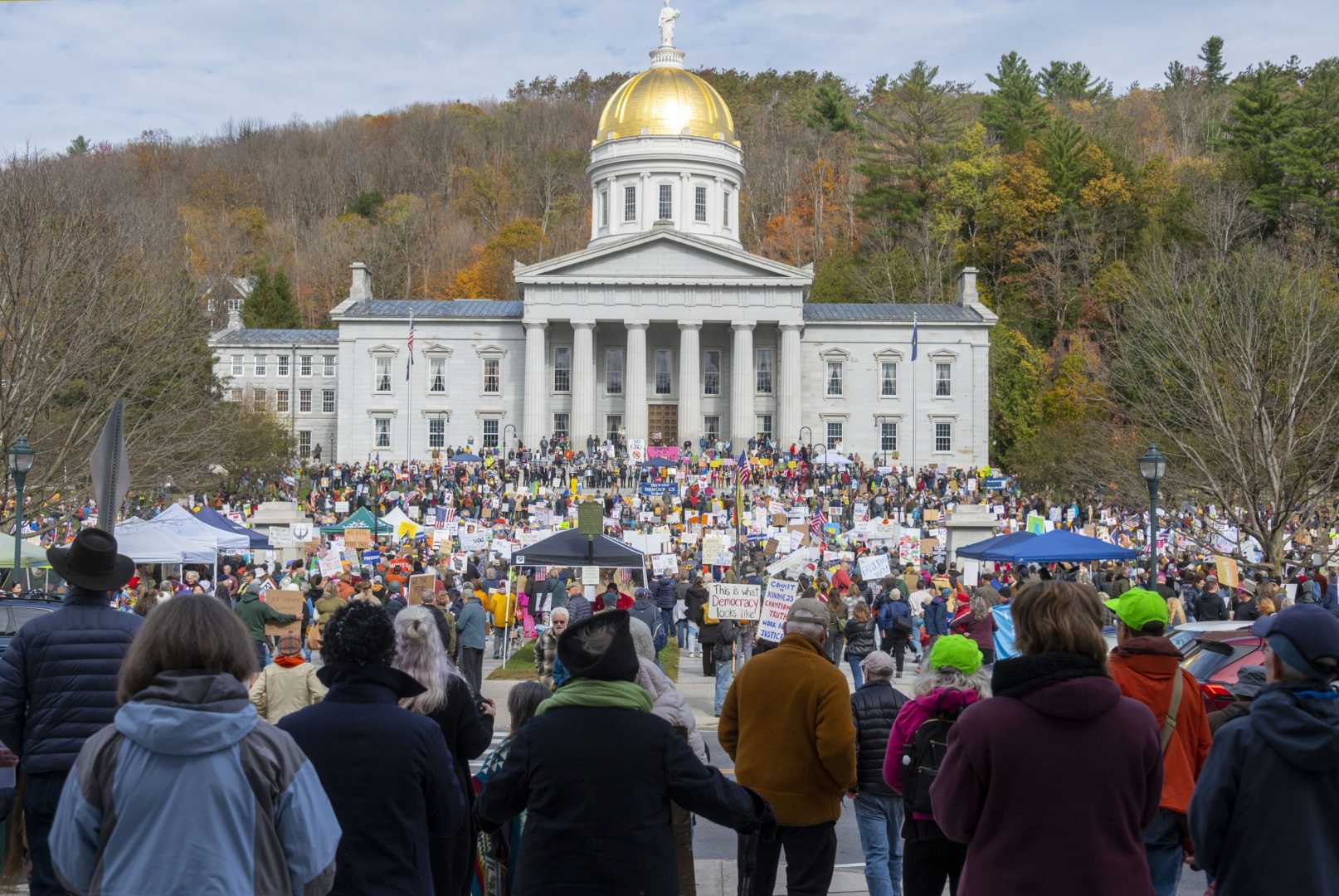
WATERBURY, Vermont — In June, a No Kings rally near a white church in Vermont sparked lively debates about the legacy of the American Revolution ahead of its 250th anniversary. Residents, dressed in raincoats under a gray sky, actively engaged in anti-monarchist sentiments, some humorously donning paper crowns while others adorned themselves as butterflies, the only permitted monarchs in the U.S. Signs reading “Rejecting Kings Since 1776” and “Make Orwell Fiction Again” reflected the introspective mood of participants.
The commemoration of the American Revolution, starting in April 2025 in Lexington and Concord, promises a cascade of events culminating on July 4, 2026. However, the anticipation of these festivities is shadowed by a recent wave of political violence, raising concerns about safety and participation. “We hope for peace, but recent events make that seem far from guaranteed,” commented one attendee.
Bipartisan efforts to plan the ‘America250‘ celebrations have encountered significant hurdles. The U.S. Semiquincentennial Commission, established in 2016, has faced internal conflicts that hinder progress, with its funding sources and narratives under scrutiny, especially since the last presidential elections.
The Biden administration’s recent struggles to keep the commission independent and amicable have cast a shadow over planned events. The abrupt firing of Ariel Abergel, a Trump appointee, for breaches of trust, further illustrates the tumult within the commission. The anticipated government shutdown threatened to postpone exhibits at prominent institutions like the National Archives and Smithsonian.
A lack of cohesive planning raises concerns, as many organizations have opted not to engage with federal funding due to perceived political strings attached. “Some simply can’t take the money because it feels tainted,” shared John Dichtl of the American Association for State and Local History.
In response, other groups have engaged creatively, with projects aimed at bringing diverse voices and civic engagement to the forefront, such as the Oregon Humanities’ community conversations. The Bill of Rights Institute has collaborated with the U.S. Chamber of Commerce Foundation for civics education initiatives.
As the two-hundred-and-fiftieth anniversary approaches, some cultural organizations plan giant reflective exhibits, while others wrestle with the realities of governmental discourse about history, especially concerning discussions surrounding slavery and racial issues. Many educators express anxiety regarding teaching sensitive topics, due to fear of backlash.
Glimmers of hope persist as institutions like History Colorado and the Museum of the American Revolution unveil thoughtful exhibits focusing on pivotal moments in American history. “This is a once-in-a-generation chance to reflect on our identity as a nation,” said Jason Hanson of History Colorado, pointing to unique ways different states are adapting their commemorations to engage locals directly.
A recent rally in Vermont showcased a grassroots approach, underscoring a collective desire for common ground. College student Django Grace emphasized the importance of dialogue: “We must seek understanding rather than division,” he stated. As the United States gears up for a challenging yet potentially transformative anniversary, voices across the political spectrum highlight the importance of grappling with the nation’s past to shape its future.


