
News
Astronomers Discover New Quasi-Moon in Earth’s Orbit

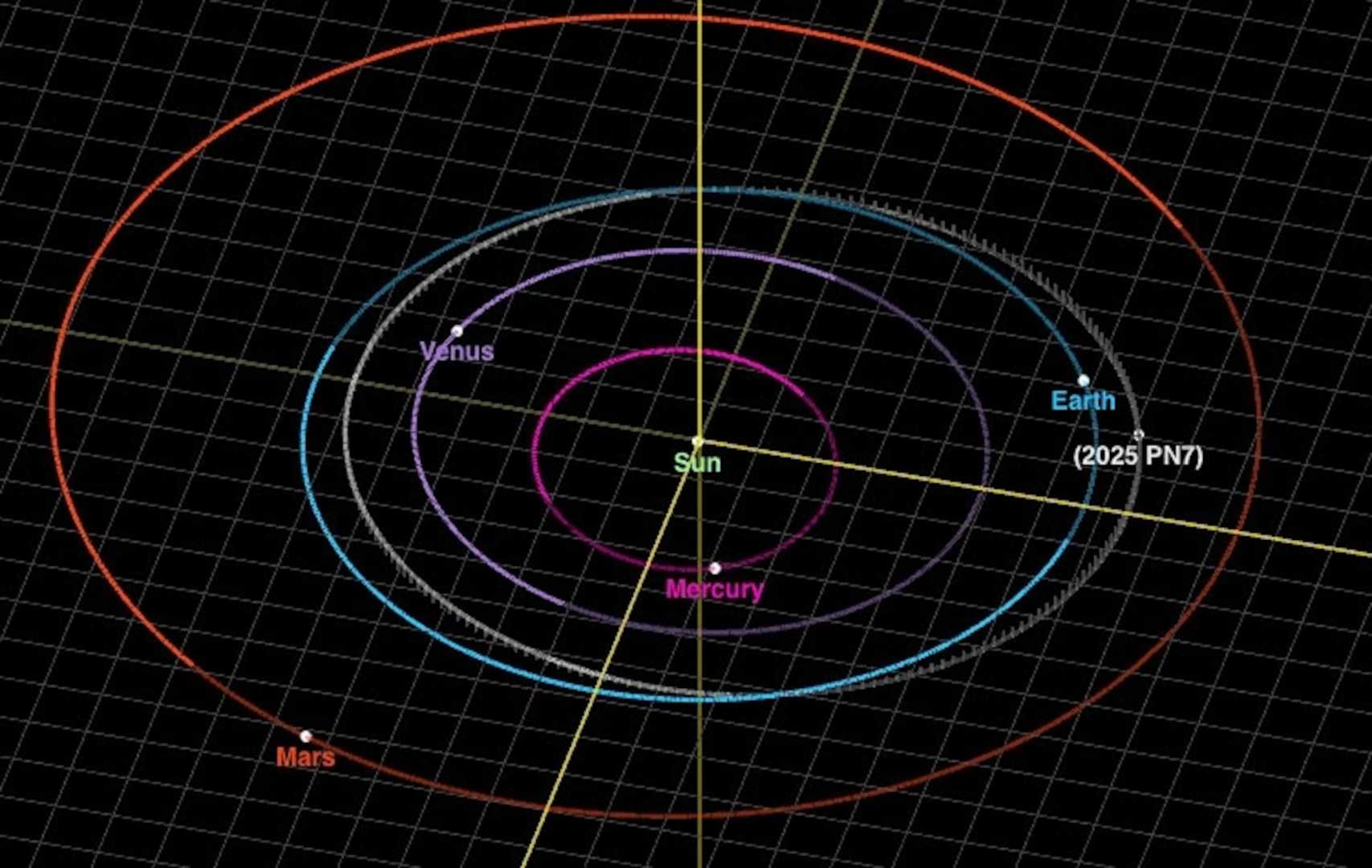
HONOLULU, Hawaii — Astronomers have detected a new quasi-moon named PN7, a mysterious space rock about the size of a building, coasting alongside Earth on its journey around the sun. Scientists were unaware of its presence until it was spotted in late August by the Pan-STARRS Observatory in Hawaii.
PN7 has been traveling alongside Earth since the mid-1960s, and its discovery increases the count of known quasi-moons to at least seven. These celestial bodies orbit the sun while appearing to circle Earth as they glide ahead or drift behind the planet.
According to Dr. Eric Sharkey, an astronomer at the University of Maryland, the discovery of PN7 is exciting as it adds to the ongoing findings of similar objects in Earth’s vicinity. “Oh cool, another one,” Sharkey remarked upon hearing about PN7, which is suspected to be one of the smallest quasi-moons discovered so far.
Quasi-moons and mini-moons, which are captured by Earth’s gravity temporarily, offer a glimpse into the dynamic nature of our solar system. Unlike Earth’s only natural satellite, the moon, these small bodies are challenging to detect without powerful telescopes.
Sharkey emphasizes the importance of these discoveries, stating, “They really make you reconsider a nice, orderly, static view of the solar system.” The orbits of these quasi-moons vary, and some can slide in and out of a shared orbit with Earth due to gravitational interactions.
PN7 is expected to change its orbital path around the sun by 2083. Scientists note that the mini-moons observed so far typically circle the planet for less than a year due to their unstable orbits.
Dr. Vasily Fedorets, an astronomer at the University of Turku, predicts that Earth likely has a mini-moon of several feet in size at any given time, despite no known mini-moons currently circling the planet.
The exploration of quasi-moons continues, with other theories suggesting these objects could originate from the asteroid belt or even be remnants of our lunar surface. Scientists are eager to uncover the origins of these celestial visitors and what they may reveal about our solar system.
As technology advances, astronomers anticipate discovering more moon-like objects, with the upcoming Vera C. Rubin Observatory expected to play a significant role in future findings.


