
News
Death Toll Surges to 442 from Flooding and Landslides in Indonesia

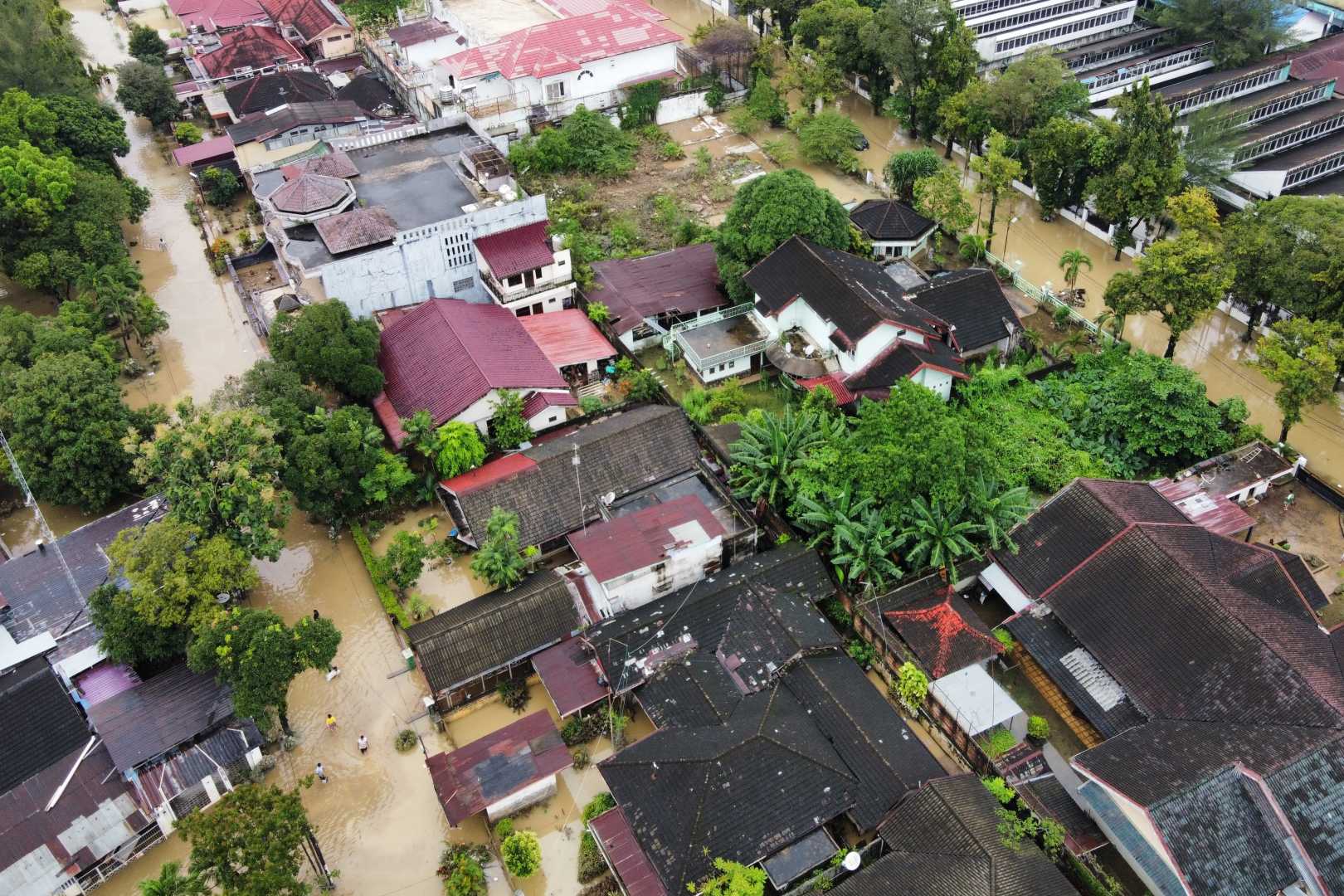
JAKARTA, Indonesia — The death toll from devastating flooding and landslides on Sumatra island has climbed to 442, according to officials. The situation worsened dramatically over the weekend as emergency evacuation efforts progressed amidst major roadblocks, with internet and electricity services remaining only partially restored.
Heavy monsoonal rains exacerbated by tropical storms have led to severe flooding in Indonesia and across Southeast Asia. Reports show hundreds dead or missing in Malaysia and Thailand, prompting widespread humanitarian concern. Current reports indicate a confirmed death toll of 170 in Thailand, alongside two fatalities in Malaysia’s northern Perlis state.
Sri Lanka is also feeling the impact of extreme weather, with nearly 160 deaths attributed to flooding and mudslides. An aerial survey reveals extensive flooding across southern Asia due to torrential rainfall.
An unusual tropical storm named Cyclone Senyar resulted in catastrophic infrastructure damage in Indonesia, leading to landslides and widespread flooding. One resident in Aceh Province, Arini Amalia, described the chaos, saying, “The current was very fast, in a matter of seconds it reached the streets, entered the houses.” She and her grandmother were forced to seek refuge at a relative’s house on higher ground and returned to find their home completely submerged.
Another resident, Meri Osman, described being “swept away by the current” while attempting to save his belongings. In the city of Bireuen, another resident stated, “During the flood, everything was gone; I wanted to save my clothes, but my house came down.” Rescue operations have struggled to keep pace with the rising waters, leaving hundreds stranded in a desperate situation.
In Tapanuli, the worst-hit area of Sumatra, reports indicate that residents have begun ransacking shops for food amid critical shortages. Pressures are mounting on the Indonesian government to declare a national disaster in Sumatra to expedite a more organized response to the crisis.
In Thailand’s southern Songkhla province, flooding has risen to over 3 meters (10 feet), resulting in at least 145 deaths, marking one of the worst flooding episodes in a decade. The total number of affected individuals across all 10 provinces has exceeded 3.8 million, according to official estimates.
Hat Yai, particularly hard hit, experienced 335mm of rainfall in just one day—a record not seen in 300 years. With waters beginning to recede, hospital officials in Hat Yai were forced to relocate corpses to refrigerated trucks due to an overwhelmed morgue.
Residents like Thanita Khiawhom expressed frustration, stating, “We were stuck in the water for seven days and no agency came to help.” In response, the Thai government has promised relief measures, including compensation of up to two million baht (about $62,000) for households who lost family members.
In nearby Malaysia, while the death toll remains lower, the flooding has had significant impacts, particularly in Perlis state where tens of thousands are forced into emergency shelters. Meanwhile, Sri Lanka faces its own crisis, with over 15,000 homes destroyed and authorities declaring a state of emergency.
The extreme weather conditions across the region have been attributed to a combination of tropical storm systems, including Typhoon Koto, which is now moving towards Vietnam. So far, three deaths related to Typhoon Koto have been reported in Vietnam.
Although it is challenging to correlate individual extreme weather events with climate change, scientists assert that such impacts are becoming more frequent and intense due to ongoing climate shifts.


