
Business
Fabergé Winter Egg Breaks Auction Records in London

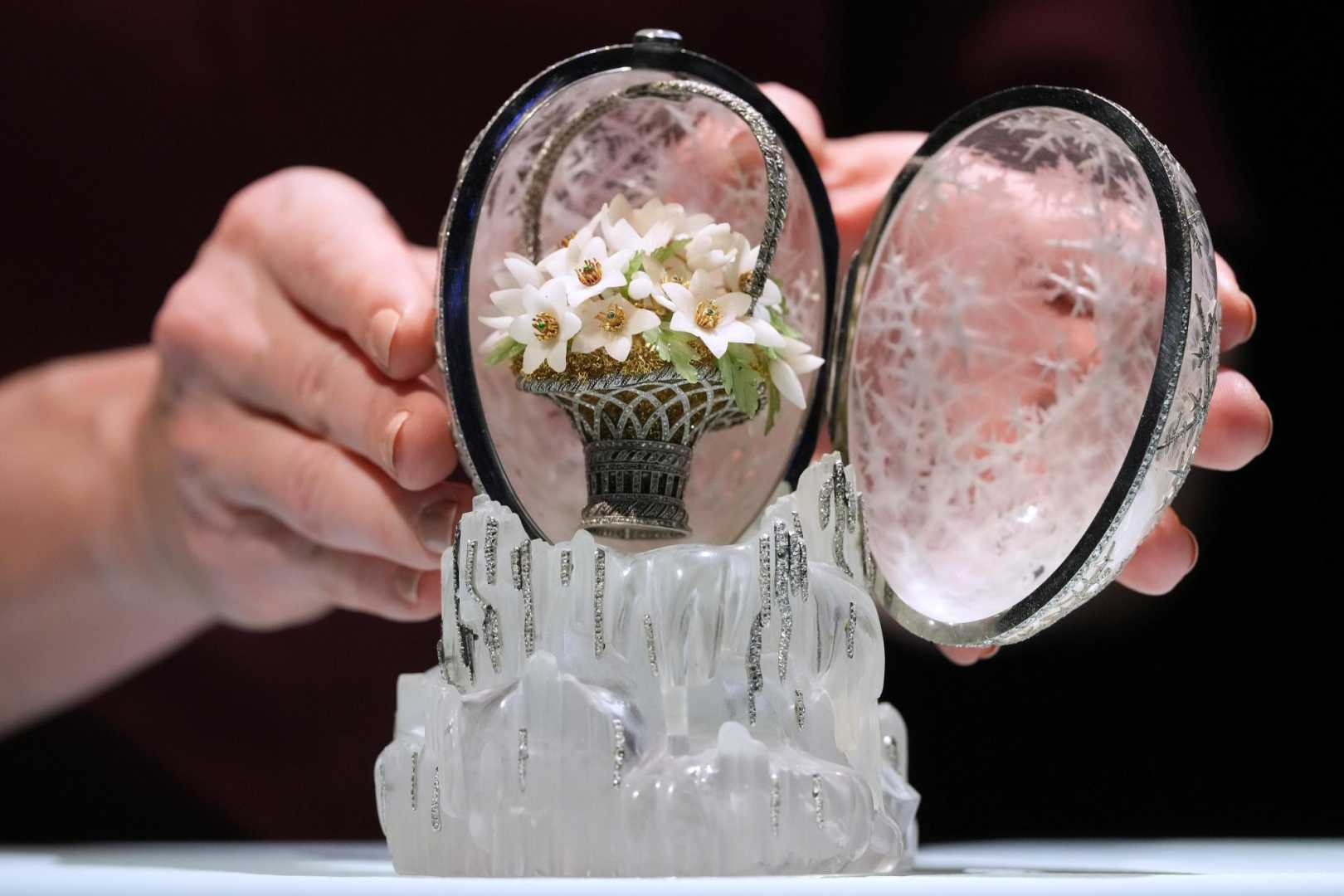
London, England — One of the last Fabergé eggs in private hands sold for £22.9 million ($30.2 million), including fees, on Tuesday, setting a record as the most expensive work by the Russian jeweler ever auctioned. The Winter Egg, commissioned by Tsar Nicholas II as a gift for his mother in 1913, was purchased by an unidentified buyer after a tense three-minute bidding battle at Christie’s auction house.
This staggering price surpassed Christie’s pre-sale estimate of £20 million ($26 million). The sale emphasizes the increasing rarity of the House of Fabergé’s Imperial Eggs, none of which has appeared at auction in over 23 years. The famous jewelry house created only 50 such eggs, and the Winter Egg is now one of just seven remaining in private hands; the others are either lost or owned by museums.
The bejeweled eggs were produced for Nicholas II and his predecessor, Alexander III. They were given as Easter gifts to family members from 1885 to 1916. Each egg took about a year to design and create, with the tsars typically ordering new ones shortly after the previous delivery.
Before the auction, Margo Oganesian, head of Christie’s Fabergé and Russian artworks department, described the Winter Egg as “the most spectacular, artistically inventive and unusual” among the 50 eggs. “Most of them are based on historical styles — of Rococo or Neoclassicism — but the Winter Egg is an object in its own style,” she said in a phone interview with CNN, highlighting its modern design.
The Winter Egg, primarily made from rock crystal, is crafted to resemble a block of ice adorned with frost. It features a snowflake design made from platinum and 4,500 rose-cut diamonds. Inside is one of Fabergé’s signature surprises: a small hanging basket filled with wood anemones made from white quartz, nephrite, and garnets.
This egg’s design is notable for being created by a female jeweler, Alma Pihl. According to legend, Pihl, who was the niece of Fabergé’s chief jeweler, came up with the idea after observing ice crystals forming on a window in her workshop.
Tsar Nicholas II initially bought the Winter Egg for 24,600 rubles, marking it as the third-highest price ever paid for a Fabergé work, according to records published by Christie’s.
Kieran McCarthy, co-managing director at Wartski, a British antique jewelry dealer specializing in Fabergé’s works, stated that the price reflects the craftsmanship needed to transform precious materials into a representation of nature. He noted that the individual diamonds are so small they have “no intrinsic value.” Instead, their worth lies in the artistic expression they represent. “It’s like holding a lump of ice in your hand,” he shared.


