
News
Massive Lava Fountain Erupts at Kilauea, Webcam Destroyed

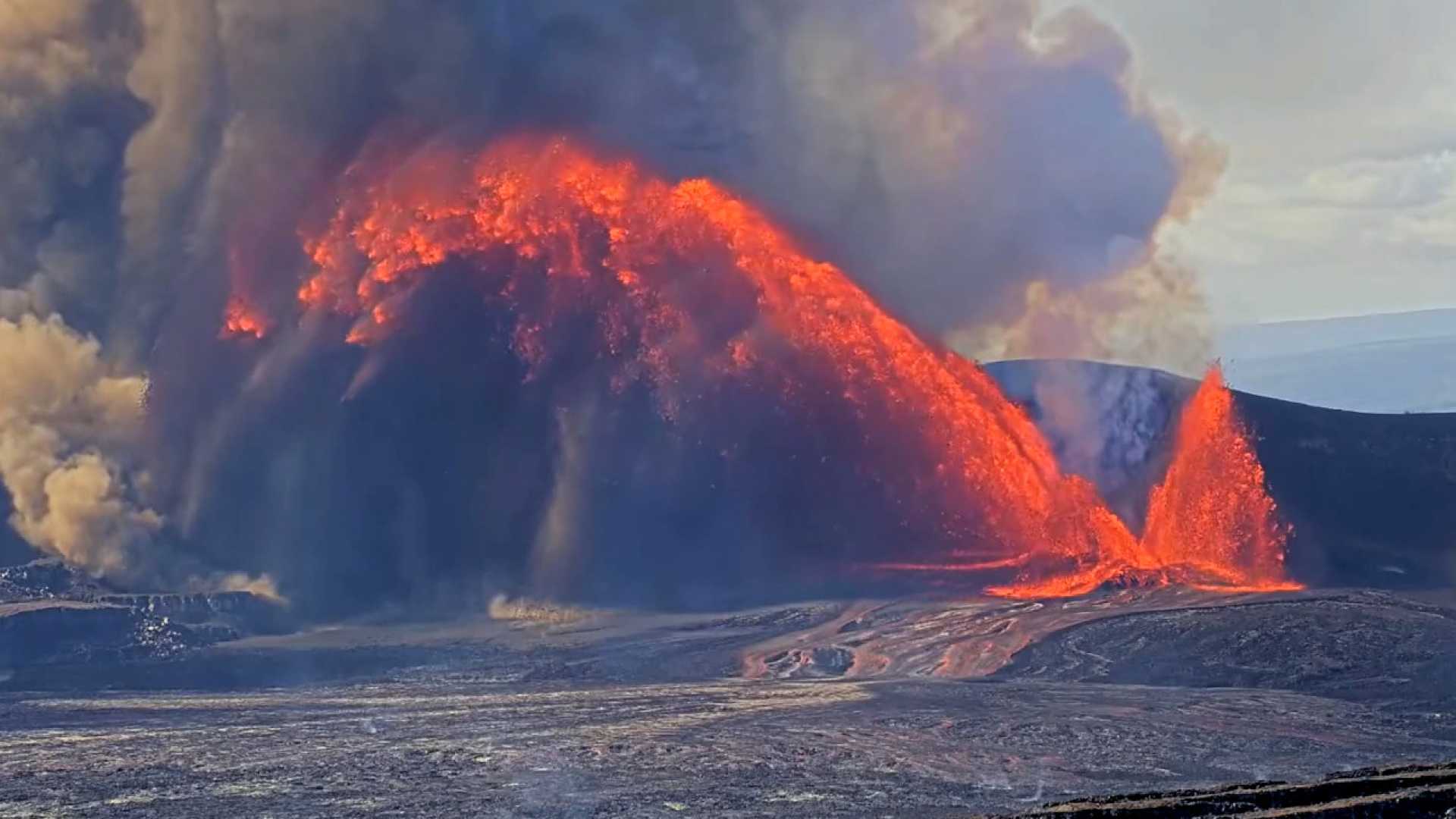
HAWAIʻI VOLCANOES NATIONAL PARK, Hawaii — An enormous lava fountain erupted from Kīlauea volcano on Saturday morning, destroying a U.S. Geological Survey (USGS) webcam that was livestreaming the event. Episode 38 of Kīlauea’s ongoing eruption began at 8:45 a.m. HST, following a day of low-level volcanic activity.
Witnesses reported impressive lava fountains emerging from both the north and south vents of the volcano, with heights quickly reaching 50 to 100 feet. Within an hour, the situation escalated dramatically, with rare triple-fountains erupting—two from the north vent and one from the south vent. This marked a first for this eruptive episode.
At approximately 9:45 a.m., the eruption shifted suddenly. The fountain from the south vent surged dramatically, appearing to explode and launching lava, gas, and rock debris over 1,000 feet into the air. The intense eruption destroyed the webcam positioned in a hazardous area closed to the public.
The webcam offered a unique view of the volcanic activity, capturing the menacing cloud of hot pumice and gas as it approached. It provided observers with a glimpse of the powerful eruption just moments before it was engulfed by lava.
The USGS has maintained Kīlauea’s alert level at WATCH and the Aviation Color Code at ORANGE due to the volcanic activity. Emergency officials in the area have warned residents about elevated levels of gas and tephra following the eruption, urging those with respiratory sensitivities to avoid the region. Hazards on roadways include reduced visibility and potential traffic congestion.
The high-effusion rate from this episode has created a dramatic plume extending over 20,000 feet above sea level. Contrary to some circulating claims, the USGS has clarified that groundwater is not driving the fountains.
As concerns about safety continue, the National Weather Service issued a special warning about potential light ashfall in the Puna District. Satellite data confirm that the ash cloud is moving due east from Kīlauea’s Halemaʻumaʻu Crater.
Officials report that this eruption has produced approximately 13 million cubic yards of lava within the first six hours. Previously, episodes had similar explosive activities confined mostly to the Halemaʻumaʻu crater area.


