
News
Ancient Skull Reconstruction Alters Understanding of Human Evolution

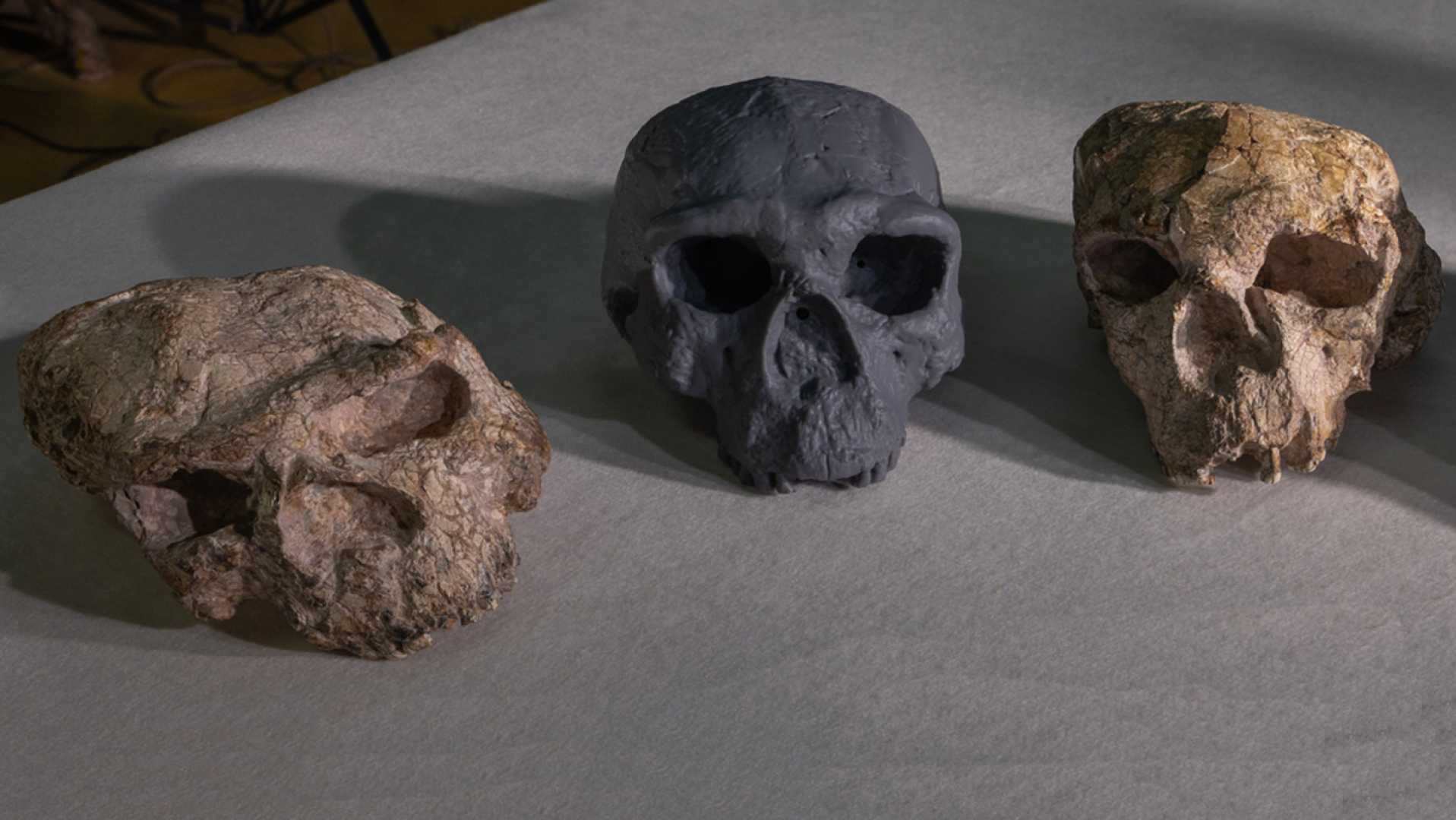
SHIYAN, China – A newly reconstructed skull estimated to be around 1 million years old is bringing a fresh perspective to the human evolutionary tree. Found decades ago along a riverbank in central China, the badly crushed skull, known as Yunxian 2, was the focus of a recent detailed analysis that suggests it may belong to an early ancestor of modern humans and Denisovans.
Researchers digitally reconstructed the fossil, which had long been defied classification due to its deformation. According to the study published Thursday, its features indicate that the skull is part of a lineage that includes Denisovans, a group of prehistoric humans with a complicated ancestral background.
Chris Stringer, a paleoanthropologist at London’s Natural History Museum and coauthor of the study, stated, “This changes a lot of thinking because it suggests that by one million years ago, our ancestors had already split into distinct groups.” This challenges the previously held belief that modern humans diverged from a common ancestor only around 600,000 years ago.
The analysis highlights a broader understanding of human evolution, indicating a more intricate picture of how species like Homo sapiens and Homo neanderthalensis may share a common ancestor. The research also points to the need for further exploration into fossil records, especially in East Asia, which may hold vital clues regarding human evolution. Stringer mentioned that the presence of fossils like the Yunxian 2 can help clarify what he called the “muddle in the middle,” the puzzle surrounding human evolution from 300,000 to one million years ago.
Fossils of this age are rare, and, according to Xiaobo Feng, a professor at Shanxi University and the study’s first author, “A fossil of this age is critical for rebuilding our family tree.” The Yunxian 2 skull, along with another similarly aged specimen found nearby, plays a crucial role in understanding human lineage and has already prompted re-evaluations of existing theories.
Despite the enthusiasm, some in the scientific community express caution about how definitive the conclusions drawn can be. Ryan McRae, a paleoanthropologist at the Smithsonian National Museum of Natural History, suggested the phylogenetic relationships drawn from the skull could be overly ambitious given the limited available data. Still, this reconstruction exemplifies how advanced imaging techniques are revolutionizing the study of ancient human fossils.
The findings could potentially shift the timeline for when distinct human species emerged, possibly pushing back the emergence of Homo sapiens by 400,000 years. As research continues and techniques improve, the story of human evolution may become even more complex and fascinating.


