
News
Supreme Court to Consider Challenging Landmark Same-Sex Marriage Ruling

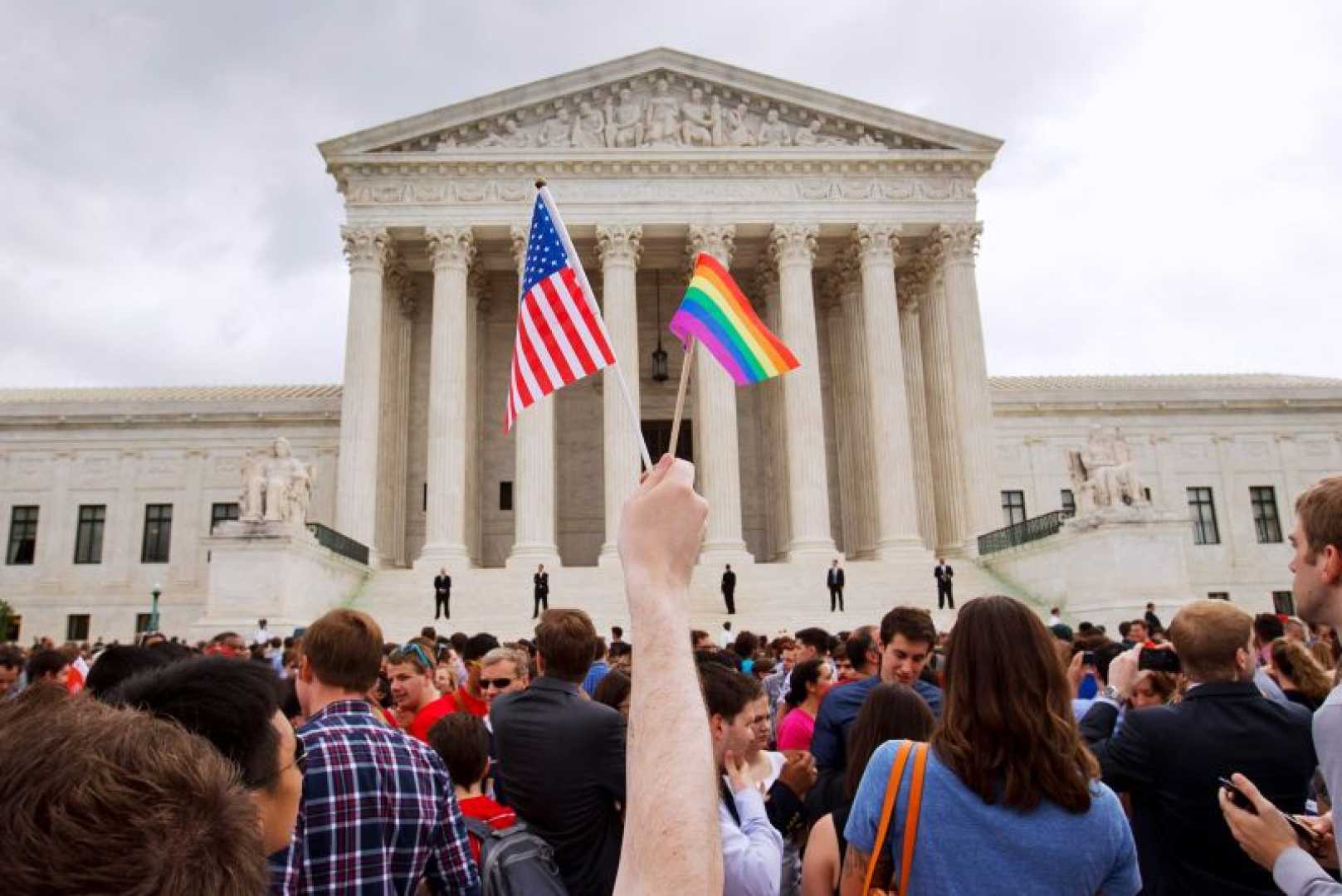
Washington, D.C. — The Supreme Court is set to meet behind closed doors on Friday to discuss a controversial appeal that seeks to overturn its historic decision allowing same-sex marriage across the United States. This move has stirred concerns among LGBTQ advocates despite the court’s previous signals indicating a reluctance to revisit the landmark ruling.
The appeal is led by Kim Davis, a former county clerk from Kentucky who refused to issue marriage licenses to same-sex couples following the Supreme Court’s 2015 Obergefell v. Hodges decision. Davis argues it is time for a “course correction” regarding the right to marry for same-sex couples.
The justices will review multiple cases in their upcoming private meeting, which provides an opportunity to announce their decision as early as next week. The court could either accept or deny the Davis appeal or hold it for further discussion, a common practice among justices.
James Obergefell, the namesake of the ruling which legalized same-sex marriage, expressed his concerns, stating, “At this point, I do not trust the Supreme Court.” The current bench differs significantly from the one that decided Obergefell a decade ago, with more conservative justices now holding seats.
After the retirement of Justice Anthony Kennedy, who played a crucial role in Obergefell, the bench saw a shift to a more conservative perspective, with Justice Brett Kavanaugh and Justice Amy Coney Barrett replacing liberal justices. Barrett, during a recent speaking engagement, acknowledged the significant reliance interests in same-sex marriage, suggesting the court may lean towards maintaining the status quo.
Despite some conservative justices voicing criticism regarding Obergefell, such as Justice Samuel Alito, he emphasized the importance of adhering to established precedents, a concept known as stare decisis.
The Obergefell decision sparked nationwide celebrations, leading nearly 600,000 same-sex couples to marry since its enactment, as reported by the Williams Institute at UCLA. However, Kim Davis’s case reflects a deeper tension regarding religious objections to the ruling, with Davis having previously faced legal consequences for her refusal to comply with the court’s order.
While Davis’s petition seeks to overturn Obergefell, much of her legal framework hinges on asserting First Amendment rights regarding religious freedoms. The 6th U.S. Circuit Court of Appeals previously denied her argument.
Legal commentators suggest that even if the Supreme Court hears the case, they may not agree on overturning Obergefell. Meanwhile, Davis’s supporters believe this case fits into a broader effort to challenge same-sex marriage rights.
Mathew Staver, representing Davis, predicts another case will arise if this appeal fails, asserting that it is not a question of if Obergefell will be overturned, but when. Mary Bonauto, a civil rights attorney, remains vigilant, emphasizing that advocates cannot become complacent amid ongoing challenges to LGBTQ rights.


