
Politics
Anticipation Builds as Takaichi Faces Sumo Tradition Dilemma

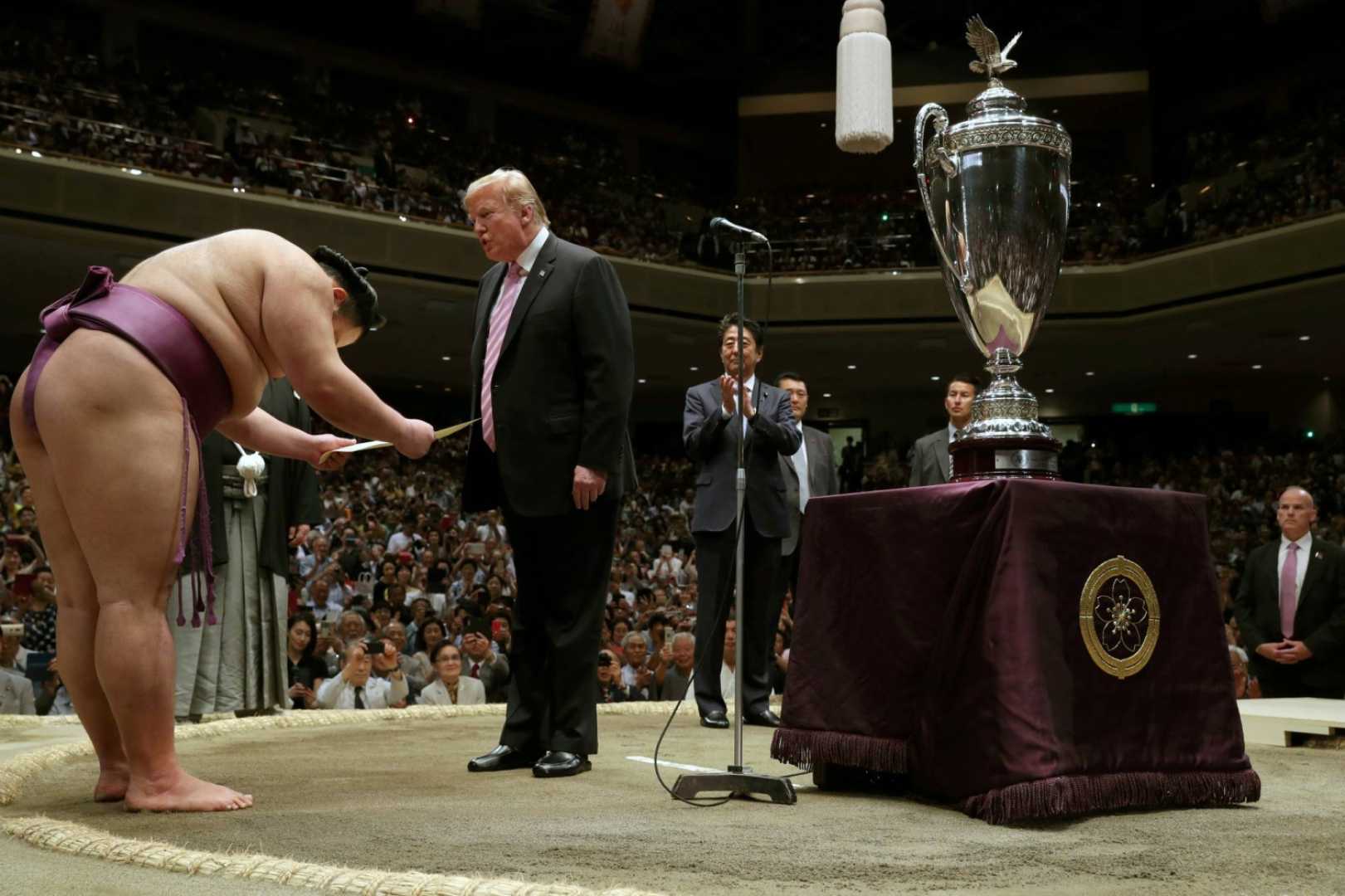
Fukuoka, Japan – As the Kyushu Grand Sumo Tournament approaches its final days, excitement mounts over whether Sanae Takaichi, Japan’s first female prime minister, will break centuries of tradition by stepping onto the dohyo to present the Prime Minister’s Cup. The tournament, which started on November 5, has kept fans and officials guessing about Takaichi’s potential appearance.
Women have long been banned from entering the dohyo, the sacred clay ring, due to Shinto beliefs that view them as impure during menstruation. As the tournament nears its conclusion, government officials have remained vague about Takaichi’s plans, leading to speculation about her role in the trophy presentation scheduled for November 12.
Minoru Kihara, the chief cabinet secretary, stated, “The prime minister wishes to respect sumo tradition and culture,” when asked about Takaichi’s participation. He emphasized that the government has yet to make a definitive decision, indicating that any actions will align with Takaichi’s wishes.
This situation is not new. Women have been denied access to the dohyo as recently as during a 2018 incident when female nurses rushed to assist a local mayor who collapsed in the ring, prompting a backlash against sumo’s strict rules. The sumo association faced criticism for its refusal to allow women on the ring even in emergencies.
The debate escalated when Tomoko Nakagawa, the mayor of Takarazuka, was forced to deliver a speech from the side of the ring rather than the dohyo. Her experience sparked outrage and highlighted the restrictions women face in a traditionally male-dominated sport.
Takaichi’s consideration to enter the dohyo could symbolize a significant shift in Japan’s cultural landscape. While some former prime ministers have presented trophies on behalf of their government, the possibility of a female leader entering the sacred space remains contentious.
Supporters of gender equality see this moment as a crucial test of Takaichi’s resolve. It is a reflection not only of her political career but also of the changing dynamics in Japanese society as the country grapples with longstanding gender roles. The decision could impact Takaichi’s public image as she navigates the expectations of her office against traditional norms.
The sumo community remains divided on this issue, with many believing that Takaichi’s presence could signal a new era for the sport. Regardless of her choice, this situation underscores the ongoing dialogue about women’s roles in Japan’s cultural heritage and the resistance to change within certain institutions.


