
Politics
DHS Campaign Sparks Concern Among Latinos Over American Identity

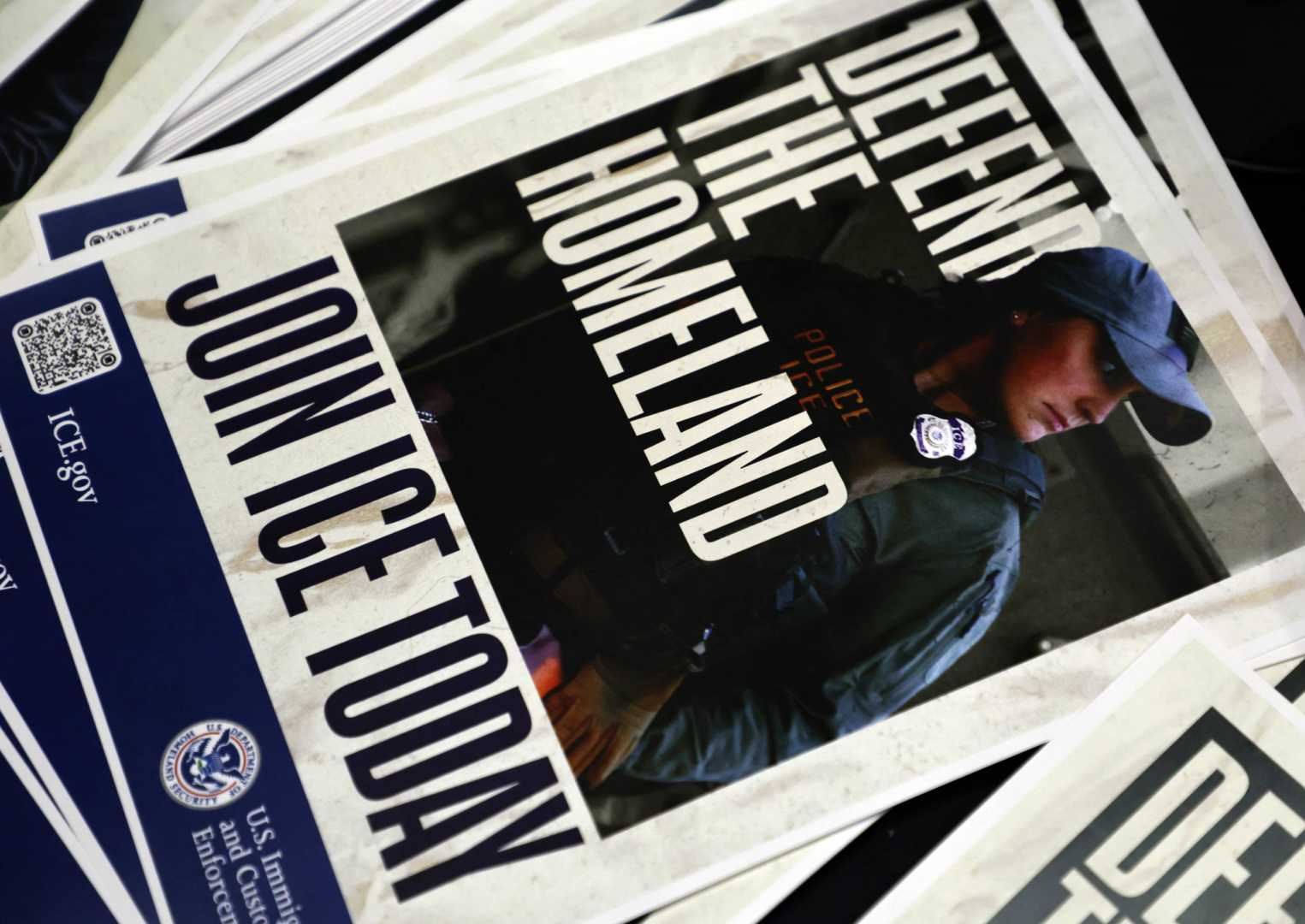
Washington, D.C. — The Department of Homeland Security (DHS) has launched a social media campaign to recruit new immigration agents and promote a vision of American culture, raising concerns among Latino communities.
This month, a recruitment video featured on DHS’s social media urged viewers to join Immigration and Customs Enforcement (ICE), claiming, “We’ve reclaimed our border, secured our nation, and begun to deport these foreign invaders.” The campaign focuses on defending American culture from what they label an invasion.
Critics argue that the DHS campaign carries an undertone of white nationalism. A recent report from the Southern Poverty Law Center categorized the messaging as promoting a white, Christian identity, which has alarmed many Latino activists and citizens.
The DHS Instagram account, boasting nearly half a million followers, features a mix of pop culture imagery, action-packed videos of ICE operations, and nostalgic artwork depicting white settlers during westward expansion. This has caused some to reflect on the historical context of such images, reminiscent of past prejudices against immigrant groups.
Julio Anta, a graphic artist, criticized the portrayal of immigrants in the campaign, noting that the imagery predominantly features white Americans. Anta, whose family immigrated from Cuba and Colombia, feels threatened by the campaign’s narrative, stating, “It puts a target on our backs.” He recalls an America that was built by immigrants, in stark contrast to the current rhetoric.
Despite the rising unease, some Latino voices express support for President Trump’s immigration policy. Peter Gonzalez, a 66-year-old resident of Tallahassee, Florida, acknowledges his own background as the son of Cuban immigrants. He supports immigration enforcement but argues that the campaign’s message about defending culture is not inclusive. “American culture is all cultures,” he said.
Gonzalez, who faced racism in his youth, emphasized that he does not feel personally targeted by DHS’s messages. However, he expressed confusion about the campaign’s double messaging regarding protection and cultural defense.
The campaign has sparked significant debate within Latino communities, with many feeling marginalized by the notion of a singular American identity. As the discourse evolves, the impact of such rhetoric continues to resonate among those from diverse backgrounds.
As the nation embarks on this cultural narrative shift, the dialogue surrounding what it means to be an American is more relevant than ever.


