
World
Honduras Faces Tense Elections Amid Fraud Allegations and High Stakes

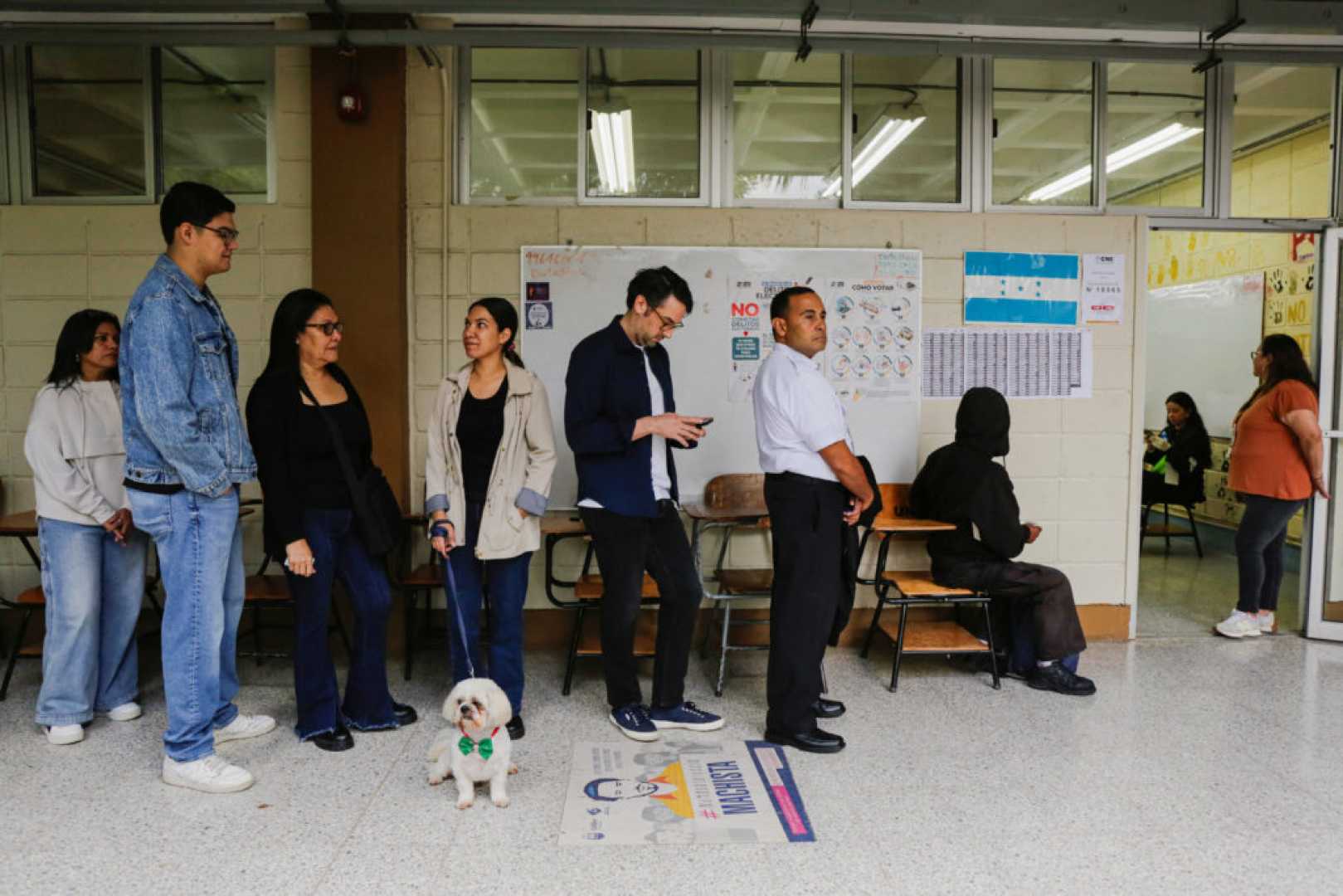
TEGUCIGALPA, Honduras — Honduras holds critical general elections on Sunday, with heightened tensions as major candidates raise concerns of possible fraud. Over six million voters will participate in a single-round election, closely watched by the United States due to its strategic interests in the country.
Political analyst Héctor Soto Caballero describes the elections as reflective of a profound political and economic divide in Honduras. “We are facing elections that highlight a conflict between two very different national projects,” he said.
For the first time, the left-wing party, Libertad y Refundación (LIBRE), has completed a presidential term, following the ouster of former President Manuel Zelaya in a 2009 military coup. Current President Xiomara Castro, Zelaya’s wife, supports Rixi Moncada, the candidate from LIBRE. The main challengers are Salvador Nasralla, a liberal populist and former ally of Castro, and Nasry Asfura, a former mayor representing the right-wing National Party.
While the Honduran economy shows moderate growth, with recent improvements in various indicators, the election campaign has focused more on fundamental issues of healthcare, education, and security rather than economic promises. “The economic scenario is more hopeful than in previous years, but Honduras remains poor,” Soto stated, noting the proposed need to democratize the economy is causing societal polarization.
Political scientist Jessica Sánchez acknowledged some advancements in Castro’s health policies but criticized the administration’s “populist” tendencies and rampant corruption allegations. One notable case led to the suspension of a high-ranking LIBRE official due to allegations of misusing public funds.
Concerns over violence persist, with Honduras maintaining one of the highest homicide rates in the region and a partial state of emergency since late 2022 in 226 out of 298 municipalities. “The ‘punishment vote’ that benefited Castro in 2021 may work against Moncada this time,” Soto cautioned.
Both the ruling party and the opposition have raised alarm over potential fraud. The National Electoral Council (CNE), which operates independently, faces scrutiny regarding its effectiveness and transparency.
U.S. Secretary of State Christopher Landau emphasized the need for a free and fair electoral process during a recent OAS session, highlighting the uncertain future Honduras faces. “We urge Honduran officials to respect the laws and allow credible elections,” he stated.
Amid these tensions, former President Donald Trump expressed strong support for Asfura, stating, “We will work together against the narcocommunists.”
As the elections approach, voter participation from the diaspora is significant, with nearly 499,000 eligible voters abroad, including 400,000 in the United States. The CNE has set up voting centers across the U.S., predominantly in areas with high concentrations of Honduran migrants.
The environment leading to the elections is complex, bringing forth questions of international relations, especially with U.S. interests and involvement in Honduras’ political landscape. The results of this election could reshape the nation’s direction amid ongoing challenges of poverty and violence.


