
Health
Kissing’s Evolution: New Study Links Behavior to Our Ancestors

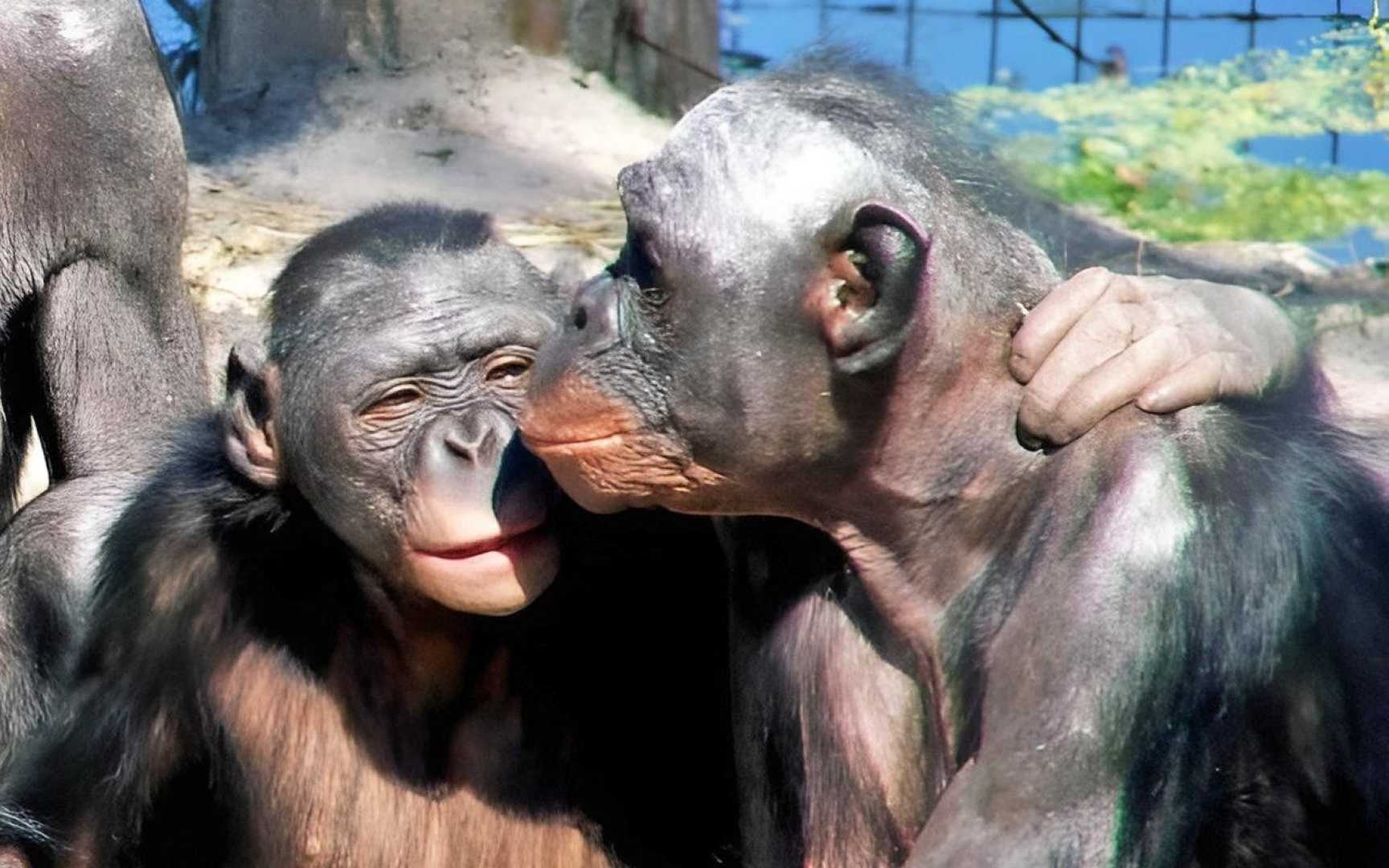
OXFORD, England — Kissing, a behavior many consider natural, is more complex than it seems. Scientists have discovered that kissing dates back as far as 21 million years, originating from ancient ancestors of great apes, including humans. This finding sheds light on an evolutionary practice that exists among various species despite the risks of disease.
The study, led by researchers at the University of Oxford, defines kissing as “non-aggressive mouth-to-mouth contact without the transfer of food.” Matilda Brindle, an evolutionary biologist and the study’s lead author, stated, “This is the first time anyone has taken a broad evolutionary lens to examine kissing. Our findings add to a growing body of work highlighting the remarkable diversity of sexual behaviors exhibited by our primate cousins.” The research was published in the journal Evolution and Human Behavior.
To investigate this behavior, the team analyzed existing data on kissing in modern primates, focusing on species such as chimpanzees, bonobos, and orangutans. They treated kissing as an evolutionary trait and deployed a computer model over 10 million iterations to simulate various evolutionary scenarios and estimate its prevalence among ancestral species.
Stuart West, a co-author of the study and fellow evolutionary biologist at Oxford, explained, “By integrating evolutionary biology with behavioral data, we’re able to make informed inferences about traits that don’t fossilize, like kissing. This allows us to study social behavior in both modern and extinct species.” The simulations indicated that Neanderthals likely engaged in kissing as well, supporting previous findings that both species exchanged saliva.
Catherine Talbot, another co-author and assistant professor at the Florida Institute of Technology, noted, “While kissing appears to be a universal behavior, it is only documented in 46% of human cultures. The social norms regarding kissing vary widely, which raises the question of whether it is an evolved behavior or a cultural invention. This research is a first step in addressing that question.”
Nevertheless, the study has limitations as it relies on previously documented behaviors and computer simulations instead of direct observations. The precise behavior of extinct species like Neanderthals remains uncertain. The researchers emphasize that their findings are a framework for future studies to explore kissing behavior among nonhuman animals with a consistent definition.
The ongoing research into the history and context of kissing continues to intrigue scientists, prompting further exploration into its significance in social behaviors across species.


