
Politics
Trump’s Pardon Raises Questions Amid Ongoing Drug War Tactics

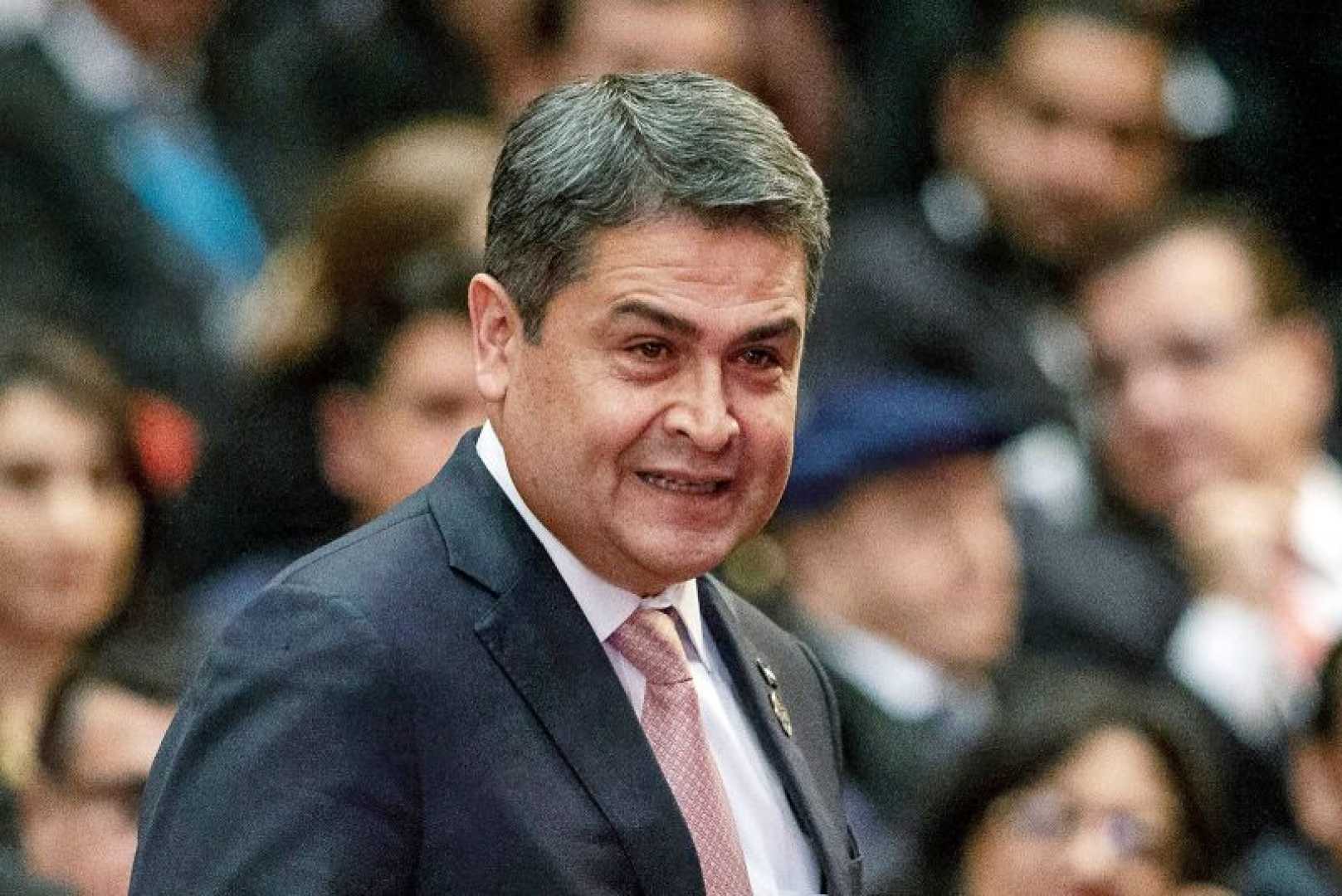
WASHINGTON, D.C. — Former President Donald Trump has sparked controversy by pledging to pardon Juan Orlando Hernández, the former president of Honduras, who was sentenced to 45 years in prison for his role in drug trafficking. This announcement comes as the U.S. continues its aggressive tactics against alleged narco boats in the Caribbean.
Hernández, known by his initials JOH, was convicted last year for facilitating a cocaine “superhighway” to the United States. Trump claimed during a press conference that many in Honduras believed Hernández was unfairly targeted. “The people of Honduras really thought he was set up, and it was a terrible thing,” Trump said.
Critics have called the decision to pardon Hernández hypocritical, especially as the U.S. government ramped up military operations against alleged Venezuelan drug boats, claiming a war on drugs. Former DEA chief Mike Vigil described Trump’s counter-drug efforts as a “charade.” He noted the inconsistency in targeting Maduro while easing pressures on a drug dealer in a country allied with the U.S.
The DEA has been critical of the rationale behind Trump’s actions. “It just shows that the entire counter-drug effort of Donald Trump is a charade — it’s based on lies, it’s based on hypocrisy,” Vigil stated. He highlighted that Hernández was directly involved in the importation of billions of dollars’ worth of cocaine into the U.S. before and during his presidency.
Contradicting Trump’s narrative, Vigil pointed out that evidence strongly implicated Hernández as a major player in the drug trade, unlike other traffickers such as Joaquín ‘El Chapo‘ Guzmán, who never held a presidential office. “If Trump is giving this guy a pardon, why is he not giving El Chapo a pardon?” he questioned.
Besides drug-related concerns, Hernández’s connections with various Latin American cartels were underscored during his trial, including an admitted $1 million bribe from El Chapo to support his political campaign. His brother, Juan Antonio Hernández, is also serving a prison sentence for similar charges.
Critical voices in the drug enforcement community argue that Trump’s double standards expose a lack of a cohesive strategy against drug trafficking in Central America. Orlando Pérez, a Latin America expert, noted that political affiliations heavily influence which leaders are pursued. “It’s all ad hoc and based on political considerations,” Pérez said.
The administration’s operations in the Caribbean have reportedly resulted in dramatic military actions, including the destruction of over 20 boats since September, aimed at painting Maduro’s regime as a narco-terrorist organization. However, experts like Vigil question the effectiveness of these measures: “He’s killed approximately 80 people without providing concrete evidence they were carrying drugs,” he remarked.
Despite these aggressive tactics, many remain skeptical about the legitimacy of the allegations against Maduro’s government. Some experts argue that the claims of a sophisticated drug cartel operating under Maduro’s leadership are exaggerated. “They don’t have an infrastructure,” Vigil said, labeling many accusations as “nonsense.”
As the debate continues, Trump’s decision to pardon Hernández looms over upcoming elections in Honduras, with possible implications for U.S.-Honduran relations, making this complex situation a pivotal issue to watch.


