
Education
Students Nationwide Rally to Defend Academic Freedom from Trump Policies

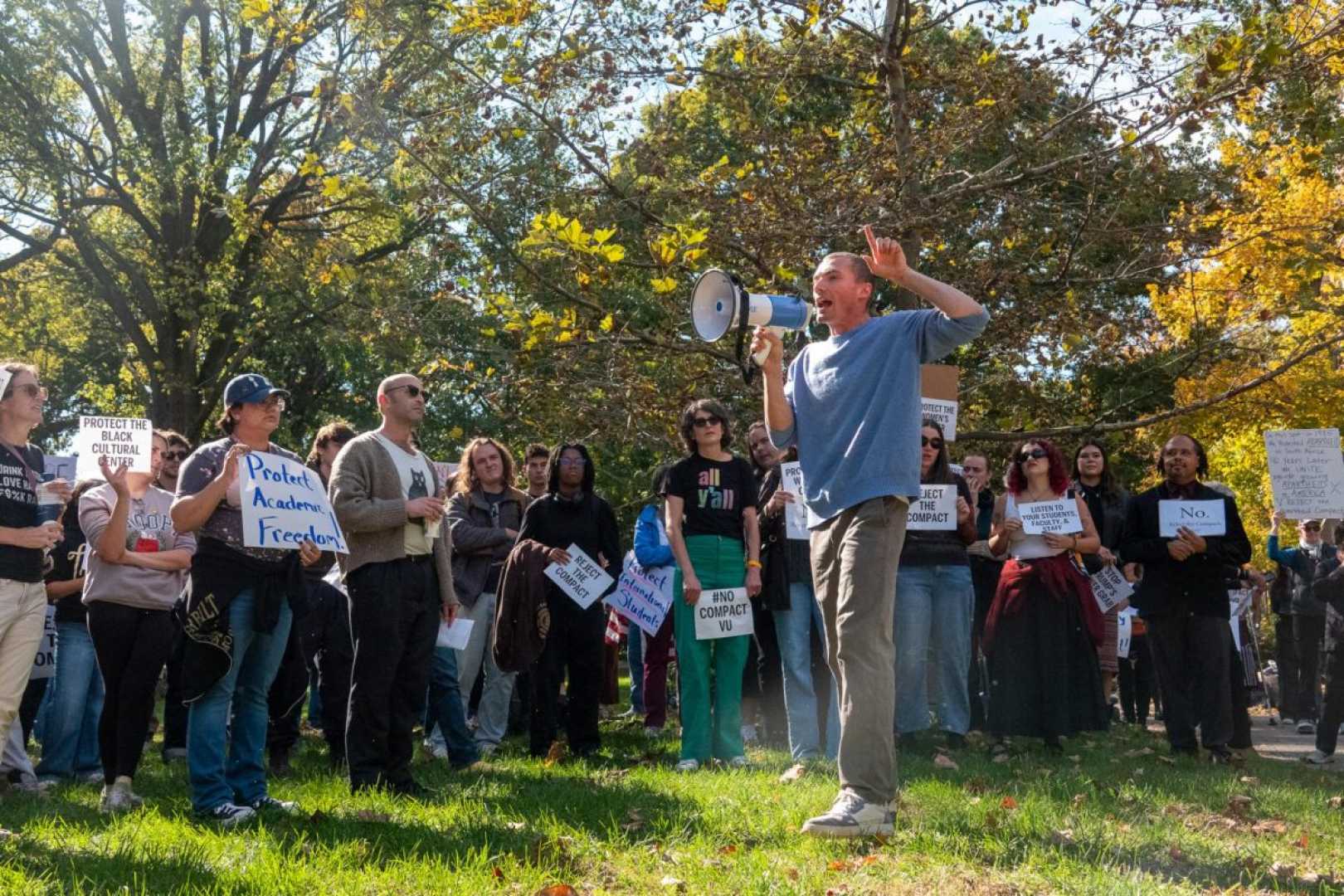
USA – On Friday, students, faculty, and staff across more than 100 college campuses in the United States gathered to protest what they called the Trump administration’s attack on academic freedom. This event marked the beginning of a coordinated series of protests organized by a network named Students Rise Up.
The goal of the movement is to raise awareness and culminate in larger student strikes and a general strike planned for May Day 2026. Organizers hope to unite students and workers for this cause.
Demonstrators oppose the Trump administration’s proposed ‘Compact for Academic Excellence,’ which aims to give universities preferable access to federal funding in exchange for compliance with certain ideological conditions. As of now, only one school, New College of Florida, has signed this compact, which critics describe as a pathway to ideological control in higher education.
Alicia Colomer, the managing director at Campus Climate Network, emphasized the importance of independence in academia. “Universities should be a place of learning, not propaganda machines,” she stated as students took to the streets.
At the University of Kansas, protesters called for an end to partnerships with weapons manufacturers and the respect of immigrant rights. Meanwhile, at Duke University in North Carolina, students advocated for improved wages and protections for diverse student populations.
Brown University in Rhode Island hosted a creative demonstration, inviting people to leave handprints on a banner that outlined their demands. Simon Aron, a co-president of Brown Rise Up, expressed hope that the administration had underestimated student resolve. “Trump came to our community thinking we could be bullied out of our freedom. He was wrong,” he declared.
In New York City, demonstrators targeted Apollo Global Management’s headquarters in a protest against CEO Marc Rowan, a principal backer of the compact and a significant figure in student debt issues. This reflects wider concerns about the influence of wealthy individuals in shaping educational policies.
As the rallies concluded, Todd Wolfson, president of the American Association of University Professors (AAUP), expressed that defending higher education now relies on unification among students, faculty, and staff. “There is only one way forward in saving higher education and democracy writ large,” he stated.


